
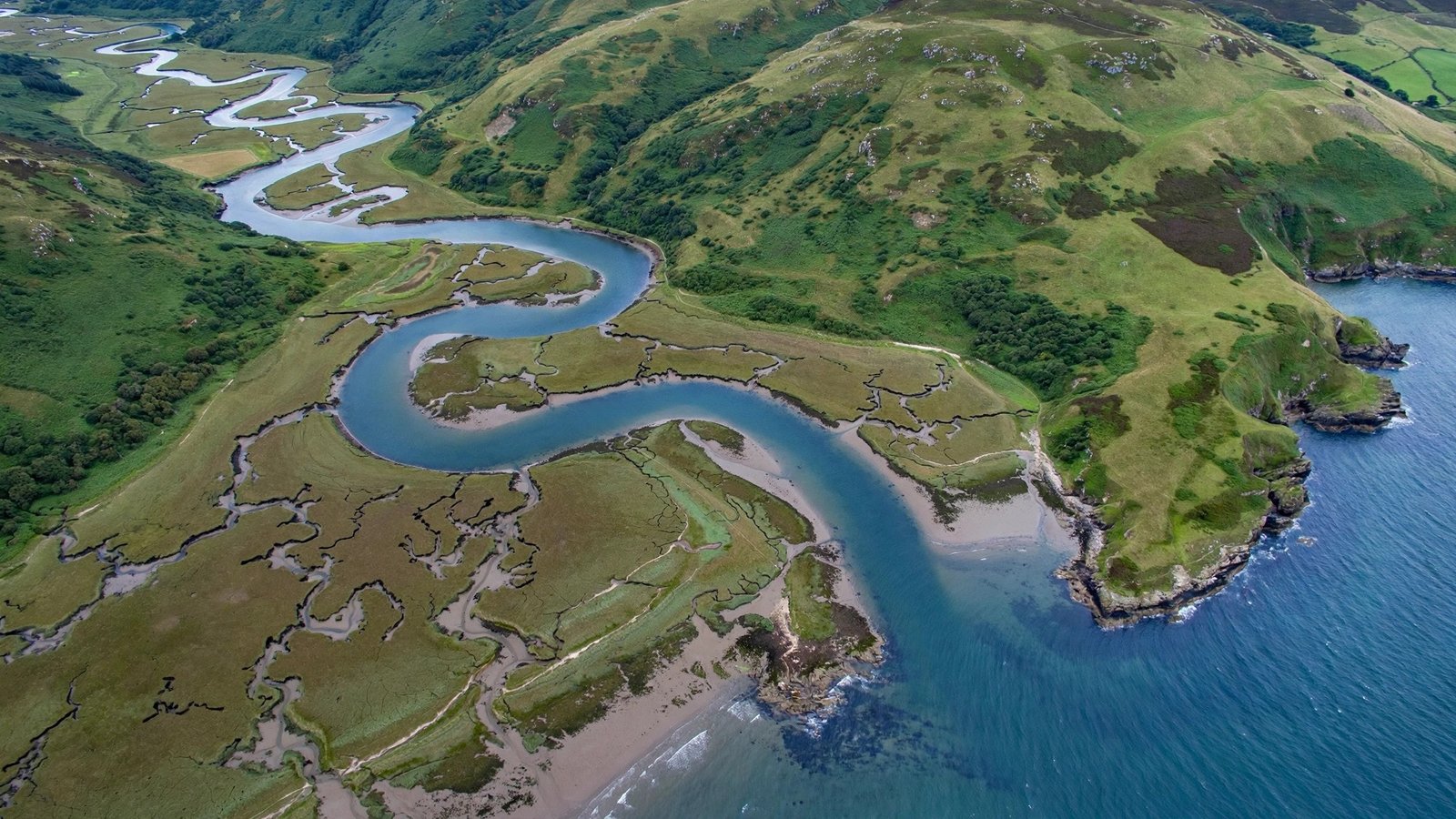

RIA — three letters, one vowel, a whole branch of coastal geography hiding inside it — is the answer to the NYT crossword clue “Coastal inlet.” It appeared in the New York Times on March 26, 2026, and again on December 27, 2023, and it has been one of the most dependable three-letter answers in the puzzle’s history. This is a science-first kind of crossword word: to understand why it’s always the answer, you first have to understand what a ria actually is.
What Is a Ria, Geographically?
A ria is a drowned river valley: a valley carved by a river on dry land that was later flooded by the sea. When sea levels rose after the last ice age — roughly 10,000 years ago — the lower reaches of coastal river valleys filled with seawater. The river kept flowing into its own drowned mouth, and the result is a long, narrow, branching inlet that looks like a river but tastes like the ocean.
The textbook definition has one crucial qualifier: the valley must be unglaciated. If a glacier carved it, you call it a fjord. If a river carved it and the sea merely moved in afterward, it’s a ria. That single distinction — river vs. glacier — is the whole science of the word.
Ria vs. Its Lookalikes: Fjord, Estuary, Firth, Cove
Coastal geography has a crowd of near-synonyms, and crossword constructors love swapping them. Here’s the field guide:
- Ria — drowned river valley, unglaciated. Named for the rías of Galicia, Spain.
- Fjord — drowned glacial valley, typically steep-walled and deep (Norway, New Zealand).
- Estuary — the tidal mouth of a river where fresh and salt water mix; a process term, not a shape term. Many rias are estuaries.
- Firth — the Scots word for a coastal inlet or estuary (Firth of Forth); often a ria in origin.
- Cove — a small, sheltered bay, usually formed by erosion of a headland rather than drowning.
- Bay — the generic big one.
Why does this matter for solvers? Because the clue is doing scientific work. “Coastal inlet” is broad — COVE (4), FIRTH (5), and RIA (3) are all plausible — so letter count decides. Three letters means RIA almost every time.
Real-World Rias You Can Point To on a Map
The word itself comes from the Galician ría, because the textbook examples line Spain’s northwest coast:
- Rías Baixas, Galicia, Spain — the namesakes: Ría de Vigo, Ría de Pontevedra, Ría de Arousa. Famous for mussel farming on floating rafts.
- Chesapeake Bay, USA — the largest estuary in North America is, geologically, a ria system: the drowned lower valley of the Susquehanna River.
- Sydney Harbour, Australia — the world’s largest natural harbor is a ria, the drowned valley of the Parramatta River.
- The Fal and Helford rivers, Cornwall, UK — classic small-scale rias, with the drowned valleys winding far inland.
- Milford Sound’s neighbors? — No: those are fjords. New Zealand’s Fiordland was glaciated, which is exactly the distinction the word insists on.
Notice the pattern: rias make superb natural harbors. Drowned valleys are deep, sheltered, and navigable far inland — which is why cities like Sydney and Baltimore sit on them. Geography shapes history, and history shapes vocabulary, and vocabulary shapes the crossword grid.
How a Ria Forms, Step by Step
- A river carves a valley across a coastal plain during a period of lower sea level.
- The ice age ends. Glaciers melt; global sea level rises by over 100 meters.
- The sea floods the valley’s lower reaches. The river keeps flowing, but now its mouth is miles inland from the old coastline.
- Tides take over. Salt water pushes up the drowned valley twice a day, creating the brackish, biologically rich environment rias are known for.
The branching, tree-like shape of a ria — visible from the air like the veins of a leaf — is the giveaway. It’s the old river’s dendritic drainage pattern, preserved in seawater.
Why Crossword Constructors Love RIA
Now the pivot from science to grid. RIA is what solvers call crosswordese: short words that appear in puzzles far more often than in everyday speech, because their letter patterns make grids possible. Three-letter entries are the mortar of American-style crosswords, and RIA’s pattern — consonant-vowel-vowel with the friendly R — crosses beautifully.
Its clue family is a study in constructor misdirection:
- “Coastal inlet” — the straight definition (NYT, March 26, 2026; NYT, December 27, 2023)
- “Small inlet” / “Narrow inlet” — the size hint
- “Fjord relative” / “Fjord’s relative” — the geology nod; now you know exactly why they’re related
- “Water feature created by rising sea levels” — the formation clue
- “Coastal inlet (anagram of ‘air’)” — the wordplay wink: RIA is literally an anagram of AIR
- “Coastal waterway” — the NYT’s December 5, 2025 variant
That anagram is the free square. If a clue ever mentions “air” near a three-letter inlet, your pen should already be moving.
Solver Tactics: Picking RIA Out of the Inlet Crowd
When you see an inlet clue, run this decision tree:
- Count the letters first. 3 → RIA. 4 → COVE (or BAY). 5 → FIRTH. This resolves 90% of cases.
- Check the crosses. RIA’s terminal A is a gift — it pairs with almost any down answer.
- Watch for the fjord hint. “Fjord relative” is RIA’s private signal; fjords and rias are the glaciated/unglaciated pair.
- Plural check. “Coastal inlets” with four letters is RIAS — seen in the LA Times on August 21, 2025.
And if you’re ever unsure between RIA and a synonym, the Crossword Solver will sort it by letter count in seconds. For five-letter word games, the Wordle Solver shows how the same pattern-matching instinct transfers — FIRTH and COVES are both fair Wordle-adjacent plays.
Frequently Asked Questions
What is the NYT crossword answer for “Coastal inlet”?
RIA — a three-letter word for a drowned river valley forming a coastal inlet. The clue last appeared with this answer in the New York Times on March 26, 2026, and previously on December 27, 2023.
What is the difference between a ria and a fjord?
A ria is a drowned river valley (unglaciated); a fjord is a drowned glacial valley. That distinction is why “Fjord relative” is a classic RIA clue.
Is RIA an anagram of anything useful?
Yes — AIR. Constructors have used “Coastal inlet (anagram of ‘air’)” as a wordplay clue, and remembering it is a free solve.
The Takeaway
RIA is three letters of pure geography: a river valley the sea moved into, a harbor the world built cities on, and a grid-friendly answer the NYT has reached for again and again. Learn the science — drowned river valley, unglaciated, fjord’s cousin — and the clue stops being a guess. It becomes recognition.
For more three-letter lifesavers, browse our crosswordese guide, and keep the Crossword Solver open for the next coastal inlet that comes your way.