

What Are the Key Numbers When Securing Financing for Automobiles?
If you’re buying a car—new or used—there’s one thing that matters more than the color, the brand, or even the monthly payment:
The numbers behind your financing.
Understanding the key numbers when securing financing for automobiles can save you thousands of dollars, protect your credit score, and help you negotiate like a pro.
Most buyers focus only on the monthly payment. That’s a mistake.
Professional lenders, dealerships, and financial advisors evaluate car loans using a specific set of financial metrics. When you understand these numbers, you move from being a borrower to being an informed buyer.
In this comprehensive guide, we’ll break down:
-
The most important numbers lenders evaluate
-
How each number impacts your approval and rate
-
Beginner-friendly explanations
-
Advanced financial strategies
-
Real-world examples
-
Risk factors and negotiation tips
-
FAQs (schema-ready answers)
Let’s begin.
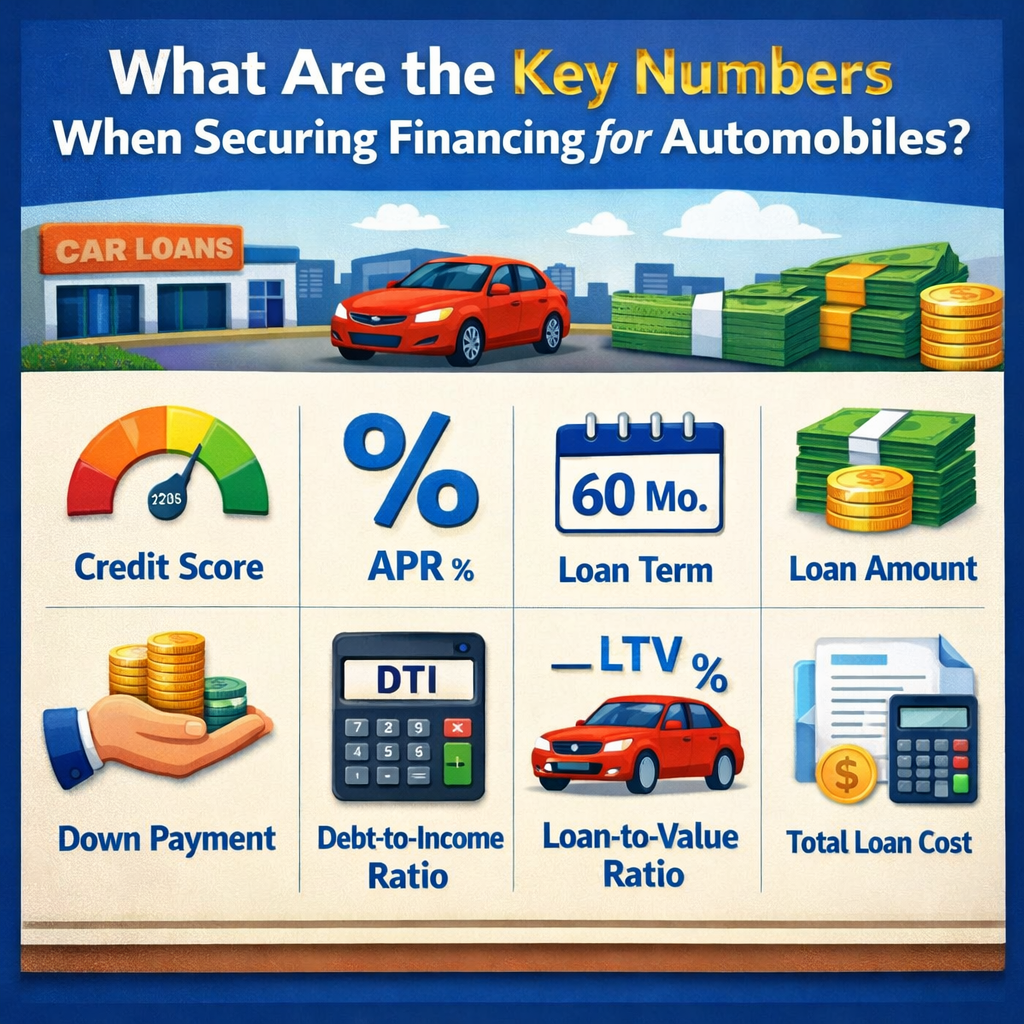
Quick Answer: The 8 Most Important Numbers in Auto Financing
If you want the featured-snippet version:
The key numbers when securing financing for automobiles include:
-
Credit Score
-
Annual Percentage Rate (APR)
-
Loan Term (Months)
-
Loan Amount
-
Down Payment
-
Debt-to-Income Ratio (DTI)
-
Loan-to-Value Ratio (LTV)
-
Total Cost of the Loan
Now let’s go deeper.
1. Credit Score – The Foundation of Auto Financing
What It Is
Your credit score (typically 300–850) measures your creditworthiness.
Why It Matters
Lenders use it to determine:
-
Whether you qualify
-
Your interest rate (APR)
-
Required down payment
-
Loan terms available
Credit Score Tiers (Typical Auto Lending Ranges)
| Credit Tier | Score Range | Expected APR (Approx.) |
|---|---|---|
| Excellent | 720+ | 3%–6% |
| Good | 660–719 | 6%–10% |
| Fair | 600–659 | 10%–18% |
| Subprime | 500–599 | 18%–25%+ |
Rates vary by country and lender.
Real-World Example
Ali and Bilal both buy a $25,000 car:
-
Ali (740 score): 5% APR
-
Bilal (620 score): 15% APR
Over 60 months:
-
Ali pays ≈ $3,300 in interest
-
Bilal pays ≈ $10,700 in interest
Difference: $7,400
That’s the power of one number.
2. Annual Percentage Rate (APR)
What Is APR?
APR represents the true cost of borrowing, including:
-
Interest rate
-
Certain fees
It’s expressed as a yearly percentage.
Why APR Is More Important Than Monthly Payment
Dealerships may offer:
-
“Only $399 per month!”
But stretch the loan from 48 to 72 months, and you pay far more interest.
Always compare APR, not monthly payment.
3. Loan Term (Length of Loan)
Loan terms typically range from:
-
36 months
-
48 months
-
60 months
-
72 months
-
84 months
Short-Term vs Long-Term Loans
| Term | Monthly Payment | Total Interest | Risk Level |
|---|---|---|---|
| 36–48 months | Higher | Lower | Safer |
| 60 months | Moderate | Moderate | Balanced |
| 72–84 months | Lower | Higher | Risky |
Hidden Risk: Negative Equity
Long loan terms increase the chance you’ll owe more than the car is worth.
That’s called being “upside down.”
4. Loan Amount
This is the total amount financed.
It equals:
Vehicle Price + Taxes + Fees – Down Payment – Trade-in Value
Important Insight
Borrowing less reduces:
-
Interest paid
-
Monthly burden
-
Financial risk
Professional tip: Finance only what you need.
5. Down Payment
A down payment is upfront money you pay toward the vehicle.
Why It’s Powerful
A larger down payment:
-
Reduces loan amount
-
Lowers monthly payments
-
Improves approval odds
-
Decreases LTV ratio
Recommended Down Payment
-
New car: 10–20%
-
Used car: 10% minimum
6. Debt-to-Income Ratio (DTI)
DTI measures:
Monthly debt payments ÷ Gross monthly income
Example
If you earn $4,000/month and pay:
-
$1,000 in total debts
DTI = 25%
Ideal DTI for Auto Loan Approval
-
Below 36% = Excellent
-
36–43% = Acceptable
-
Above 50% = Risky
Lenders use DTI to determine if you can handle another payment.
7. Loan-to-Value Ratio (LTV)
LTV compares:
Loan amount ÷ Vehicle value
If car value = $20,000
Loan = $22,000
LTV = 110%
High LTV = higher risk for lender.
Most lenders prefer LTV under 100%.
8. Total Cost of the Loan
This is the number buyers ignore most.
It includes:
-
Principal
-
Interest
-
Fees
-
Add-ons
Always calculate:
Monthly payment × total months
That’s your real cost.
Beginner Guide: How These Numbers Work Together
Think of auto financing like a system.
Your:
-
Credit score influences APR
-
APR + loan term determine total interest
-
Down payment reduces LTV
-
Income affects DTI
Change one number → everything shifts.
Advanced Insight: How Lenders Actually Evaluate You
Professional lenders assess:
-
Stability of employment
-
Length of credit history
-
Previous auto loan performance
-
Cash reserves
-
Vehicle type (new vs used risk)
They run risk models, not guesswork.
Hidden Numbers Many Buyers Miss
1. Dealer Markup
Dealers can mark up your APR above lender rate.
Example:
Bank approves 6%
Dealer offers 8%
Dealer keeps difference.
Always ask:
“What is the buy rate?”
2. Prepayment Penalty
Some loans penalize early payoff.
Check contract carefully.
3. GAP Insurance Cost
Covers negative equity if car is totaled.
Useful for:
-
Low down payment
-
Long loan term
But compare cost carefully.
Real-World Case Study
Sara buys a $30,000 SUV.
-
Down payment: $3,000
-
Loan: $27,000
-
APR: 9%
-
Term: 72 months
Monthly payment ≈ $540
Total paid ≈ $38,880
Interest ≈ $8,880
If she chose:
-
60 months at 7%
Total interest ≈ $5,700
Savings: $3,180
Benefits of Understanding Key Numbers
✔ Save thousands in interest
✔ Improve negotiation power
✔ Avoid predatory lending
✔ Protect your credit
✔ Make financially sound decisions
Risks of Ignoring Auto Financing Numbers
⚠ Overpaying for years
⚠ Negative equity
⚠ Loan default
⚠ Damaged credit score
⚠ Repossession risk
How to Improve Your Numbers Before Applying
Improve Credit Score
-
Pay bills on time
-
Reduce credit card balances
-
Avoid new hard inquiries
Lower DTI
-
Pay off small debts
-
Increase income
-
Refinance high-interest loans
Increase Down Payment
-
Save 3–6 months
-
Sell unused assets
-
Use trade-in wisely
Comparison: Bank vs Dealership vs Credit Union
| Feature | Bank | Credit Union | Dealership |
|---|---|---|---|
| APR | Competitive | Often Lowest | Variable |
| Convenience | Medium | Medium | High |
| Negotiation Power | Strong | Strong | Moderate |
| Transparency | High | High | Varies |
Credit unions often offer the best rates for members.
People Also Ask (FAQs)
What is the most important number when securing financing for automobiles?
The most important number is your credit score, as it directly affects your APR, approval odds, and loan terms.
What APR is considered good for a car loan?
A good APR is typically under 6% for borrowers with strong credit. Rates vary based on market conditions and credit profile.
Is a longer loan term bad?
Longer terms lower monthly payments but increase total interest and risk of negative equity.
How much down payment is ideal?
Experts recommend 10–20% for new vehicles and at least 10% for used cars.
Can I negotiate my auto loan APR?
Yes. You can negotiate with dealerships or secure pre-approval from a bank or credit union for leverage.
The Psychology Behind Car Loan Decisions
Dealership financing is structured to:
-
Make monthly payment feel affordable
-
Distract from total interest
-
Upsell add-ons
Financial literacy neutralizes this pressure.
Final Thoughts: Master the Numbers, Master the Deal
Securing financing for automobiles isn’t complicated—but it is numerical.
When you understand:
-
Credit score
-
APR
-
Loan term
-
DTI
-
LTV
-
Down payment
-
Total loan cost
You shift from reactive buyer to strategic decision-maker.
The key numbers when securing financing for automobiles determine whether your car becomes a smart investment—or an expensive mistake.