
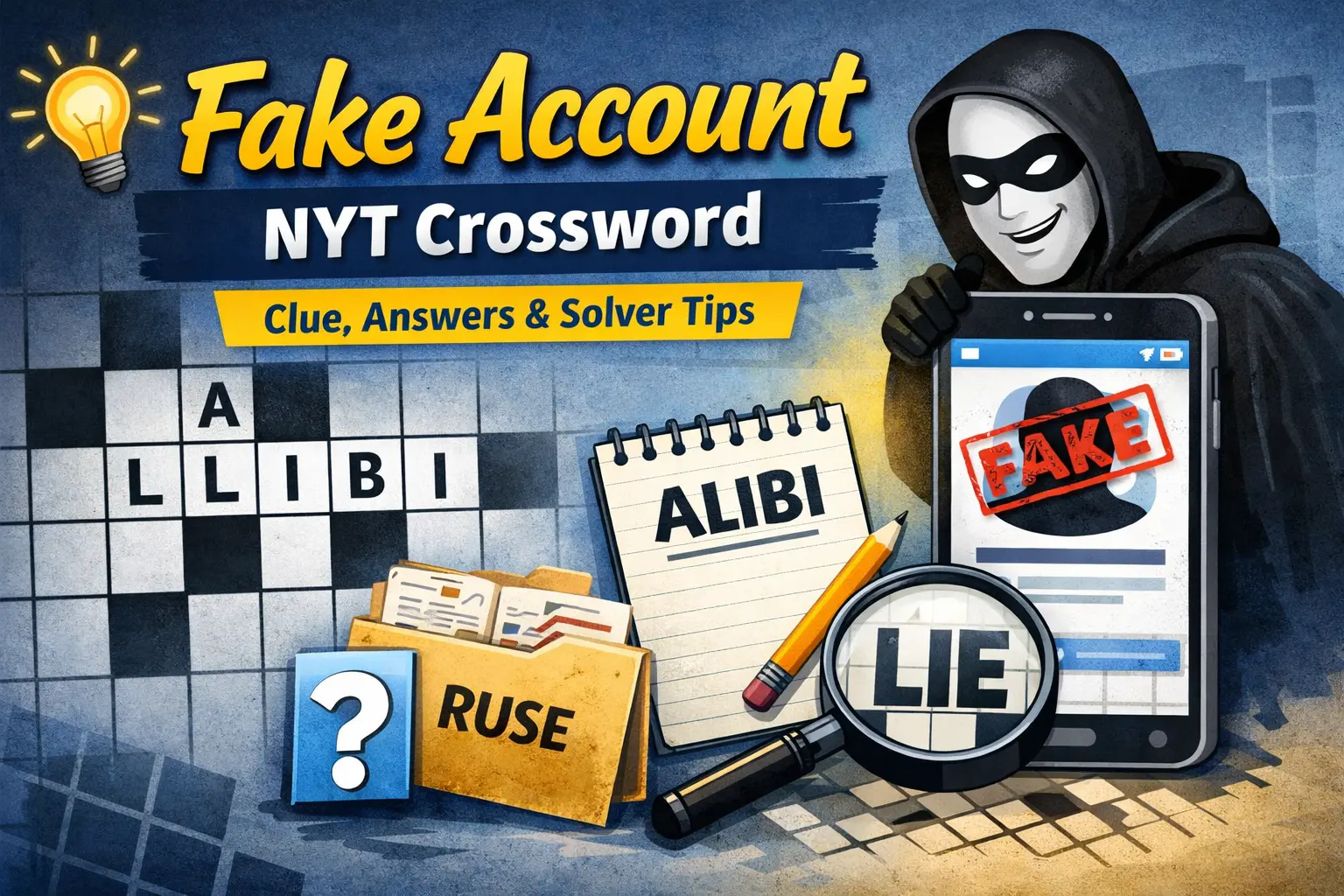

If you’ve ever been stuck on a clue like “fake account NYT Crossword” in the The New York Times Crossword, you’re not alone. This seemingly simple phrase can have multiple meanings depending on context, wordplay, and puzzle difficulty.
In this comprehensive guide, you’ll learn exactly what “fake account” means in crossword puzzles, the most common answers, how to decode tricky clues, and expert strategies to improve your solving skills—from beginner to advanced level.
What Does “Fake Account” Mean in NYT Crossword?
Quick Definition (Snippet-Friendly)
“Fake account” in the NYT Crossword usually refers to a deceptive, false, or fabricated explanation, story, or identity.
It can point to:
- A made-up story
- A false narrative
- A deceptive identity
- A misleading explanation
Unlike everyday usage (like fake social media accounts), crossword clues often rely on wordplay, synonyms, or double meanings.
Common Answers for “Fake Account” Clue
Here are the most frequently seen answers:
| Answer | Meaning | Length | Usage Context |
|---|---|---|---|
| ALIBI | A fabricated excuse or defense | 5 letters | Very common |
| LIE | False statement | 3 letters | Simple puzzles |
| RUSE | Trick or deception | 4 letters | Medium difficulty |
| MYTH | Fictional story | 4 letters | Context-based |
| FABRICATION | Invented story | 11 letters | Rare/long grids |
| PRETEXT | False reason | 7 letters | Advanced puzzles |
👉 Among these, ALIBI is the most common answer in NYT Crossword grids.
Why “Fake Account” Is a Tricky Clue
Crossword clues in the NYT are famous for their cleverness. The phrase “fake account” is tricky because it can be interpreted in multiple ways:
1. Literal Meaning vs Crossword Meaning
- Literal: Fake online account
- Crossword: False explanation or excuse
2. Ambiguity
The clue doesn’t specify:
- Story?
- Identity?
- Excuse?
So the solver must rely on:
- Letter count
- Crossing words
- Puzzle theme
3. Wordplay & Misdirection
NYT clues often mislead intentionally. “Account” might mean:
- A story
- A report
- A reason
How to Solve “Fake Account” Clues Step-by-Step
Step 1: Check the Letter Count
The number of boxes in the grid is your biggest hint.
- 3 letters → Likely LIE
- 5 letters → Likely ALIBI
- 4 letters → Could be RUSE or MYTH
Step 2: Look at Crossing Words
Fill in nearby answers to narrow possibilities.
Example:
You can confidently fill in ALIBI.
Step 3: Identify the Clue Type
Ask yourself:
- Is this a straight definition?
- Or wordplay?
If it’s straightforward → likely ALIBI or LIE
If tricky → could be RUSE or PRETEXT
Step 4: Consider Puzzle Difficulty
| Puzzle Day | Difficulty | Likely Answer Type |
|---|---|---|
| Monday–Tuesday | Easy | LIE, ALIBI |
| Wednesday–Thursday | Medium | RUSE, MYTH |
| Friday–Saturday | Hard | PRETEXT, FABRICATION |
| Sunday | Mixed | Any of the above |
Real Examples of “Fake Account” in NYT Crossword
Let’s look at realistic clue-answer scenarios:
Example 1
Clue: Fake account
Answer: ALIBI
👉 Explanation: An alibi can be fabricated to avoid blame.
Example 2
Clue: False story
Answer: LIE
👉 Direct and simple.
Example 3
Clue: Deceptive explanation
Answer: RUSE
👉 Slightly more nuanced meaning.
Understanding Crossword Wordplay (Advanced Level)
To master clues like “fake account,” you need to understand deeper crossword mechanics.
1. Synonyms
“Fake” → false, bogus, sham
“Account” → story, report, explanation
Combine them:
- False + story → LIE
- Sham + explanation → ALIBI
2. Double Definitions
Sometimes the clue works in two ways:
Fake account
- Fake → ALIBI (excuse)
- Account → explanation
3. Misleading Contexts
“Account” might trick you into thinking of:
- Banking
- Social media
But crossword logic prefers:
- Narrative or explanation
Beginner Tips for Solving NYT Crossword Clues
If you’re new, follow these:
✔ Start with Easy Clues
Fill obvious answers first to build momentum.
✔ Use Pencil (or digital undo)
Don’t hesitate to guess.
✔ Think Simple First
Before overthinking, try:
- LIE
- ALIBI
Intermediate Strategies
✔ Recognize Common Patterns
Certain clues repeat with similar answers.
“Fake account” → ALIBI appears frequently.
✔ Build Vocabulary
Learn common crossword words:
- RUSE
- EPEE
- OREO
✔ Focus on Crossings
Even one correct letter can unlock the answer.
Advanced Solver Techniques
✔ Pattern Recognition
Experienced solvers recognize clue-answer patterns instantly.
✔ Theme Awareness
Some puzzles have themes affecting clue meaning.
✔ Word Length Mastery
Quickly match clue types with answer lengths.
Benefits of Understanding Crossword Clues
Learning clues like “fake account” improves:
- 🧠 Critical thinking
- 📚 Vocabulary
- 🔍 Pattern recognition
- 🧩 Problem-solving skills
Common Mistakes to Avoid
❌ Overthinking Simple Clues
Sometimes the answer really is just LIE.
❌ Ignoring Letter Count
Always match the grid.
❌ Taking Words Literally
Crosswords love figurative meanings.
“Fake Account” vs Similar Clues
| Clue | Likely Answer | Difference |
|---|---|---|
| Fake account | ALIBI | Excuse |
| False story | LIE | Direct falsehood |
| Trick | RUSE | Deception |
| Made-up tale | MYTH | Fictional narrative |
FAQs (People Also Ask)
What is the most common answer for “fake account” in NYT Crossword?
ALIBI is the most common answer because it represents a fabricated explanation or excuse.
Can “fake account” mean something else in crosswords?
Yes, depending on context, it can mean LIE, RUSE, MYTH, or PRETEXT.
How do I know which answer is correct?
Use:
- Letter count
- Crossing letters
- Puzzle difficulty
Why are NYT Crossword clues so tricky?
They rely on:
- Wordplay
- Double meanings
- Misdirection
Is “fake account” ever literal (like social media)?
Rarely. Crossword clues usually favor figurative meanings rather than modern literal interpretations.
Pro Tips for Faster Solving
- Memorize common answers like ALIBI
- Practice daily puzzles
- Learn common abbreviations
- Stay flexible in interpretation
Final Thoughts
The clue “fake account” in the NYT Crossword is a perfect example of how simple words can hide multiple meanings. Whether the answer is ALIBI, LIE, or RUSE, the key is understanding context, structure, and crossword logic.
As you practice, you’ll start recognizing patterns instantly—and what once felt confusing will become second nature.
Actionable Takeaways
- Start with common answers like ALIBI
- Always check letter count first
- Use crossing clues to confirm
- Think beyond literal meanings
- Practice consistently to build intuition
Mastering clues like “fake account” isn’t just about solving one puzzle—it’s about developing a mindset that makes every crossword easier, faster, and more enjoyable.