
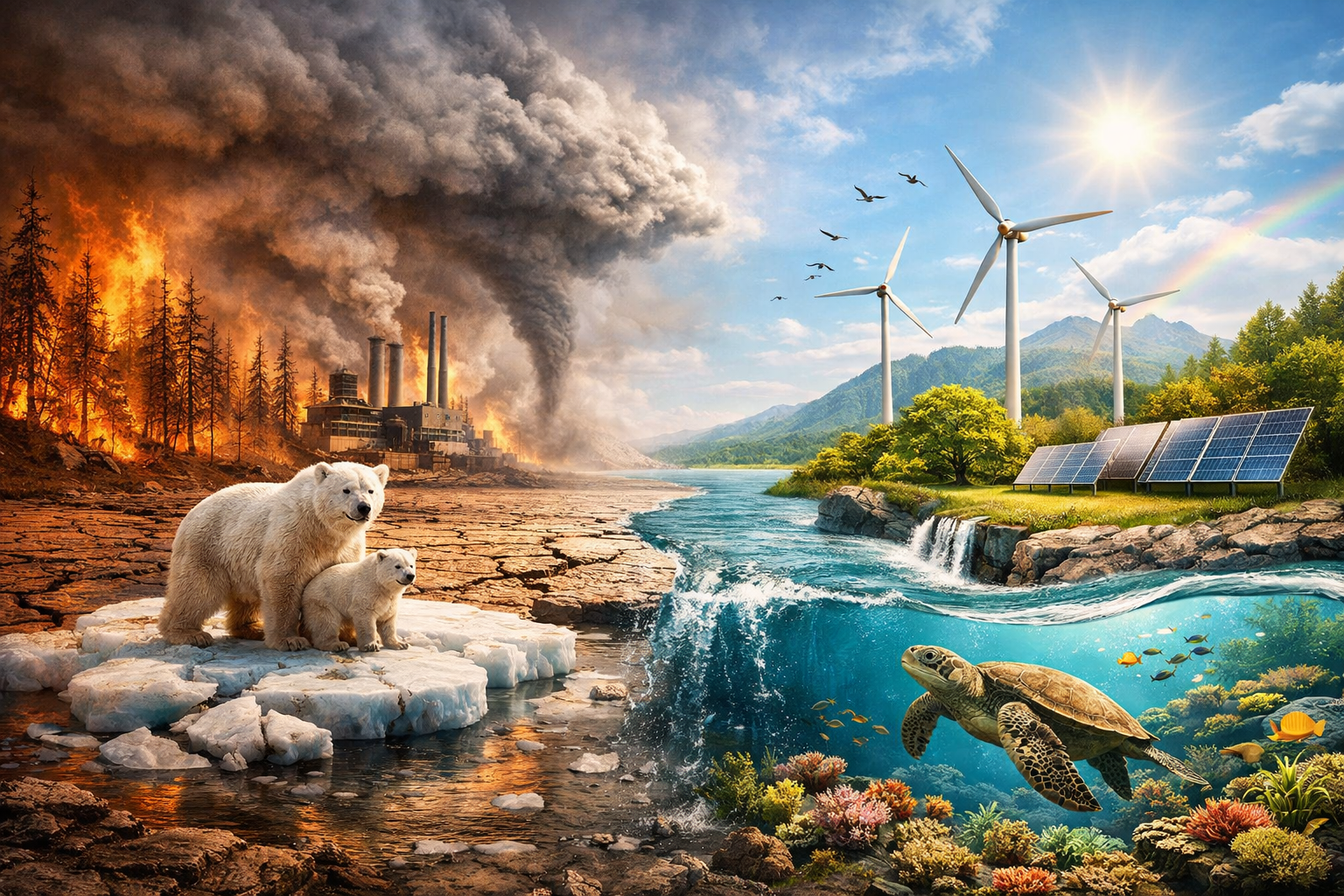

Climate Change & Environment: The Complete Guide
Climate change is one of the most pressing global challenges of the 21st century. From rising global temperatures to extreme weather events, the effects of climate change are reshaping ecosystems, economies, and human societies. Understanding the relationship between climate change and the environment is essential for individuals, governments, and businesses to take meaningful action.
This comprehensive guide explains climate change from beginner to advanced levels—covering its causes, environmental impacts, global responses, risks, and practical solutions.
What is Climate Change?
Climate change refers to long-term changes in Earth’s temperature, weather patterns, and atmospheric conditions. While climate shifts naturally over thousands of years, modern climate change is largely driven by human activities.
The primary driver is the increase in greenhouse gases (GHGs) in the atmosphere, which trap heat and raise global temperatures.
Key Greenhouse Gases
| Gas | Source | Impact |
|---|---|---|
| Carbon dioxide (CO₂) | Fossil fuel burning | Main contributor to warming |
| Methane (CH₄) | Livestock, landfills | Much stronger than CO₂ |
| Nitrous oxide (N₂O) | Fertilizers | Long-lasting warming effect |
| Fluorinated gases | Industrial processes | Extremely potent |
Organizations such as the Intergovernmental Panel on Climate Change confirm that human activity is the dominant cause of warming since the mid-20th century.
The Link Between Climate Change and the Environment
Climate change and the environment are deeply interconnected. As the climate warms, environmental systems—forests, oceans, wildlife, and weather patterns—are disrupted.
Major Environmental Systems Affected
-
Forest ecosystems
-
Oceans and coral reefs
-
Arctic ice caps
-
Freshwater systems
-
Biodiversity and wildlife habitats
Environmental degradation further accelerates climate change, creating a dangerous feedback loop.
Example:
-
Rising temperatures cause forest fires.
-
Forests release stored carbon.
-
Carbon increases atmospheric greenhouse gases.
-
Warming accelerates further.
Major Causes of Climate Change
1. Burning Fossil Fuels
Coal, oil, and natural gas power most of the world’s industries and transportation systems.
Major Sources
-
Electricity generation
-
Transportation
-
Manufacturing
-
Heating systems
Burning fossil fuels releases massive amounts of CO₂.
2. Deforestation
Forests act as carbon sinks, absorbing carbon dioxide from the atmosphere.
When forests are cut down:
-
Stored carbon is released
-
Carbon absorption capacity decreases
Deforestation contributes nearly 10–15% of global greenhouse emissions.
3. Industrial Agriculture
Modern agriculture contributes to climate change through:
-
Livestock methane emissions
-
Fertilizer-related nitrous oxide
-
Land clearing for farming
For example, cattle farming produces large amounts of methane during digestion.
4. Urbanization and Infrastructure
Rapid urban growth increases:
-
Energy demand
-
Transportation emissions
-
Construction materials such as cement
Cities currently produce over 70% of global CO₂ emissions.
5. Waste and Landfills
Organic waste decomposes in landfills and releases methane gas.
Waste mismanagement also contributes to soil and water pollution.
Key Environmental Impacts of Climate Change
1. Rising Global Temperatures
Average global temperature has increased by about 1.1°C since the late 1800s.
Consequences include:
-
Heatwaves
-
Increased evaporation
-
Desertification
2. Melting Ice Caps and Glaciers
Polar ice sheets are melting rapidly.
This causes:
-
Rising sea levels
-
Habitat loss for Arctic wildlife
-
Ocean circulation disruption
Animals like the Polar Bear depend on sea ice for survival.
3. Rising Sea Levels
Sea levels rise due to:
-
Melting glaciers
-
Thermal expansion of seawater
Coastal cities face major risks including flooding and erosion.
Cities Most at Risk
-
Miami
-
Jakarta
-
Venice
-
Bangkok
-
Shanghai
Millions of people may be displaced by coastal flooding by 2100.
4. Extreme Weather Events
Climate change increases the intensity and frequency of extreme weather.
Examples include:
-
Hurricanes
-
Floods
-
Droughts
-
Wildfires
-
Heatwaves
The National Oceanic and Atmospheric Administration reports increasing weather disasters worldwide.
5. Loss of Biodiversity
Climate change threatens ecosystems and species survival.
Major Threats
-
Habitat loss
-
Changing migration patterns
-
Ocean acidification
-
Food chain disruption
Scientists estimate that up to one million species could face extinction.
Climate Change and Ocean Health
Oceans absorb about 90% of excess heat produced by global warming.
Ocean Impacts
Coral Reef Bleaching
Rising ocean temperatures stress coral ecosystems.
Example: Australia’s Great Barrier Reef has experienced severe bleaching events.
Ocean Acidification
Oceans absorb carbon dioxide, which forms carbonic acid.
This harms:
-
Coral reefs
-
Shellfish
-
Marine ecosystems
Disrupted Marine Food Chains
Warmer oceans change migration patterns of fish and plankton.
This affects fisheries and global food supplies.
Climate Change and Human Health
Environmental changes directly affect human well-being.
Health Risks
-
Heat stroke and dehydration
-
Respiratory diseases
-
Spread of infectious diseases
-
Malnutrition due to crop failures
Vector-borne diseases such as malaria expand as mosquitoes spread into warmer regions.
Global Efforts to Combat Climate Change
The Paris Agreement
The Paris Agreement is a global treaty signed in 2015.
Main Goals
-
Limit global warming to below 2°C
-
Aim for 1.5°C temperature limit
-
Reduce greenhouse gas emissions
Countries submit climate action plans known as Nationally Determined Contributions (NDCs).
United Nations Climate Conferences
Annual climate summits such as United Nations Climate Change Conference bring countries together to negotiate solutions.
These conferences help coordinate:
-
Emission reductions
-
Climate finance
-
Technology sharing
Renewable Energy and Climate Solutions
Transitioning to clean energy is the most effective strategy to reduce emissions.
Major Renewable Energy Sources
| Energy Type | Description | Benefits |
|---|---|---|
| Solar | Uses sunlight for electricity | Unlimited and clean |
| Wind | Turbines convert wind to power | Low emissions |
| Hydropower | Energy from flowing water | Reliable electricity |
| Geothermal | Heat from Earth’s core | Stable energy supply |
Companies such as Tesla and Vestas are investing heavily in renewable energy technologies.
Climate Change Mitigation Strategies
Mitigation focuses on reducing greenhouse gas emissions.
Key Strategies
-
Transition to renewable energy
-
Electrify transportation
-
Improve energy efficiency
-
Protect forests
-
Develop carbon capture technologies
Climate Adaptation Strategies
Adaptation prepares communities for unavoidable climate impacts.
Examples
-
Flood protection systems
-
Climate-resilient crops
-
Water conservation
-
Heat-resistant infrastructure
Adaptation is particularly important for developing countries.
Climate Change and Sustainable Development
Climate action is closely linked to sustainable development.
The United Nations established the Sustainable Development Goals (SDGs) to address global challenges.
Relevant goals include:
-
Climate Action
-
Clean Energy
-
Sustainable Cities
-
Life Below Water
-
Life on Land
Role of Technology in Fighting Climate Change
Technological innovation plays a critical role in reducing emissions.
Emerging Climate Technologies
-
Carbon capture and storage (CCS)
-
Hydrogen fuel systems
-
Smart grids
-
Electric vehicles
-
AI for climate modeling
Electric vehicles from companies like BYD Company and Tesla are helping reduce transportation emissions.
What Individuals Can Do to Reduce Climate Impact
While government and industry actions are essential, individuals also play an important role.
Everyday Actions
-
Use energy-efficient appliances
-
Reduce meat consumption
-
Use public transportation
-
Reduce plastic waste
-
Support sustainable products
Even small lifestyle changes can significantly reduce personal carbon footprints.
Real-World Case Studies
Denmark’s Wind Energy Revolution
Denmark produces nearly 50% of its electricity from wind power, making it one of the world’s leading renewable energy nations.
Costa Rica’s Renewable Energy Success
The country generates nearly 100% of electricity from renewable sources, including hydro, wind, and geothermal energy.
Urban Climate Leadership
Cities like:
-
Copenhagen
-
Vancouver
-
Singapore
are implementing climate-smart infrastructure and sustainability policies.
Risks of Ignoring Climate Change
If climate change continues unchecked, the consequences could be severe.
Major Risks
-
Food shortages
-
Mass migration
-
Economic losses
-
Ecosystem collapse
-
Increased natural disasters
According to global economic models, climate change could cost the global economy trillions of dollars annually by 2100.
Climate Change vs Global Warming
Many people confuse these terms.
| Term | Meaning |
|---|---|
| Global Warming | Rise in Earth’s average temperature |
| Climate Change | Broader changes in climate patterns |
Global warming is one component of climate change.
Featured Snippet: What Causes Climate Change?
Climate change is primarily caused by the buildup of greenhouse gases in Earth’s atmosphere due to human activities such as burning fossil fuels, deforestation, industrial agriculture, and urbanization. These gases trap heat and lead to global warming and environmental disruptions.
Future Outlook: What Will the Next 50 Years Look Like?
Climate scientists project several scenarios depending on emission reductions.
Possible Outcomes
Low Emissions Scenario
-
Global warming limited to 1.5–2°C
-
Ecosystems partially stabilized
High Emissions Scenario
-
Warming above 3–4°C
-
Severe environmental and economic damage
The actions taken today will determine the outcome.
Frequently Asked Questions (People Also Ask)
What is the main cause of climate change?
The main cause of climate change is human activity—particularly burning fossil fuels like coal, oil, and gas—which releases greenhouse gases that trap heat in the atmosphere.
How does climate change affect the environment?
Climate change affects the environment by increasing temperatures, melting glaciers, raising sea levels, intensifying storms, and disrupting ecosystems and wildlife habitats.
Can climate change be stopped?
Climate change cannot be instantly stopped, but it can be slowed and stabilized by reducing greenhouse gas emissions, transitioning to renewable energy, and protecting ecosystems.
Why are forests important for climate change?
Forests absorb carbon dioxide from the atmosphere and store it in trees and soil. Protecting forests helps reduce greenhouse gases and regulate global climate.
How can individuals help fight climate change?
Individuals can reduce climate impact by conserving energy, using public transport, reducing waste, eating sustainably, and supporting environmentally responsible businesses.
Conclusion: The Path Forward
Climate change is no longer a distant threat—it is a reality already affecting ecosystems, economies, and communities worldwide. Rising temperatures, extreme weather events, and biodiversity loss highlight the urgent need for coordinated global action.
However, the challenge also presents an opportunity. By transitioning to renewable energy, protecting natural ecosystems, and embracing sustainable lifestyles, humanity can significantly reduce environmental damage and build a more resilient future.
Governments, businesses, and individuals all have roles to play. The solutions already exist; what is needed now is commitment, innovation, and collective action.