
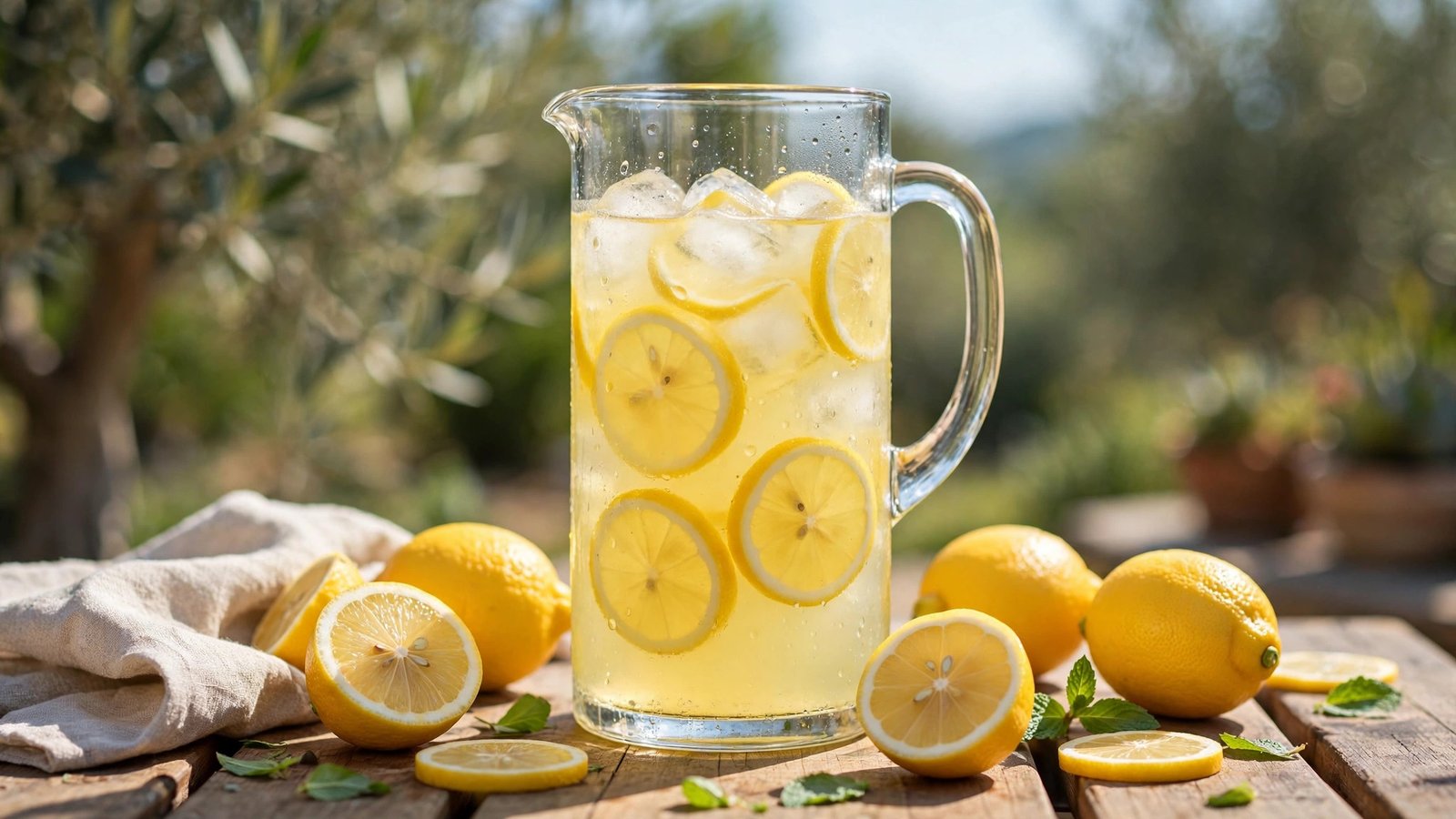

Grab any bottle of Gatorade and read the label slowly. Gator — ade. Now pour a glass of lemonade. Lemon — ade. Limeade, orangeade, cherryade, Powerade, even the old-fashioned “summer drink” on a picnic table: they all end with the same three letters, and those three letters have quietly built one of the most productive word factories in the English language.
If your crossword clue reads “Drink suffix”, the puzzle wants the factory itself: ADE.
The Answer: ADE
Clue: “Drink suffix”
Answer: ADE (3 letters)
ADE is the three-letter ending that turns a fruit into a beverage — lemon into lemonade, lime into limeade, Gator into Gatorade. The clue-and-answer pairing is thoroughly documented: the New York Times ran “Summer drink suffix” on May 6, 2025 with the answer -ADE, as recorded by both ladypuzzle.pro’s NYT answers archive and the NYXCrossword database. Gamerjournalist.com documents “Citrus drink suffix” with the answer ADE, published July 15, 2024 and last seen in the NYT. And crossword clue databases list whole families of ADE clues — “Drink name ending for ‘Power’ or ‘Gator’,” “Gator or Power follower,” “Suffix with lime” — all pointing to the same three letters.
The Suffix Lab: How Three Letters Became a Drink Empire
Let us put -ADE under the microscope and see how it works.
The Chemistry of Lemonade
The formula is beautifully simple: fruit + ADE = sweetened drink. The suffix arrived in English from French limonade, built on limon (lemon) plus -ade, an ending French itself borrowed from Spanish and Italian words for drinks made from a thing — think limonada. English speakers heard the pattern and ran with it: limeade, orangeade, cherryade, pineappleade. Once the mold existed, any fruit could be poured into it.
But -ADE does more than name drinks. The same suffix turns up in words like blockade (a blocking action) and promenade (a walking place) — it is a general-purpose “thing made from X” ending that English borrowed wholesale. Crossword constructors know this double life, which is why you will occasionally see ADE clued as “Block or stock ender” too. Three letters, several jobs.
The Sports-Drink Takeover
Then came the summer of 1965 in Gainesville, Florida. A University of Florida football coach asked team physician Dr. Robert Cade why his players were collapsing in the heat, and Cade’s lab cooked up a rehydration drink for the Gators. The name wrote itself: Gatorade — the ade of the Gators. It worked so well the drink became a billion-dollar brand, and the -ADE suffix went from picnic tables to Super Bowl sidelines.
Coca-Cola’s answer arrived in 1988: Powerade, power plus ade. Between the two, the suffix colonized the entire sports-drink aisle. Modern crossword constructors grew up with these bottles in their refrigerators, which is exactly why “Drink name ending for ‘Power’ or ‘Gator'” and “Gator or Power follower” are now standard ADE clues in crossword databases. The puzzle is simply reflecting the grocery store back at you.
Why Three Letters Carry So Much Weight
ADE is the rare suffix that is also a standalone crossword answer. Most suffixes (-ING, -TION) are too long or too fragmentary to stand alone in a grid, but ADE is three letters of pure utility: vowel-consonant-vowel, ending in the grid’s favorite letter, E. Constructors slot it anywhere they need a tiny, flexible filler — and then the clue writes itself from any of the dozen drink names it anchors.
The Clue Family: Every Way the Times Asks for ADE
ADE’s clue family is one of the largest for any three-letter answer. Here are the main branches:
- “Summer drink suffix” — the NYT’s own wording, May 6, 2025. Lemonade, limeade, and orangeade are all summer drinks; the suffix is what makes them drinks.
- “Citrus drink suffix” — documented by gamerjournalist.com (July 15, 2024), last seen in the NYT. Lemon and lime are the citrus heavyweights of the -ade family.
- “Drink suffix” / “Fruit drink suffix” — the plain-English versions; crossword-solver databases list these at 100% confidence for ADE.
- “Suffix with ‘Gator'” / “Gator or Power follower” — the sports-drink branch, straight from the grocery aisle.
- “Lemon or lime ending” — the fruit-first phrasing; same three letters.
- “Block or stock ender” — the non-drink branch (blockade, stockade). Same answer, completely different wardrobe.
Notice the pattern: the clue always hands you the host word — lemon, Gator, Power, summer drink — and asks for the tail. Once you see that shape, the answer is mechanical.
Suffix Lab Experiments: Test Yourself
The best way to own this answer is to run the factory yourself. Cover the right column and name the suffix:
- Lemon + ___ = the picnic classic
- Gator + ___ = the 1965 Florida invention
- Power + ___ = the blue-bottled rival
- Lime + ___ = the margarita’s sweeter cousin
- Block + ___ = the siege version (not a drink at all)
If you answered ADE five times, you have the idea — and you have also just solved five potential crossword clues. That is how high-frequency three-letter answers work: one pattern, endless reuse.
Crossword Tips: Pouring ADE Into Your Grid
- Suffix-shape recognition: any clue ending in the word “suffix,” “ending,” or “ender” is asking you to chop the tail off a longer word. “Drink suffix” = take the drink, keep the tail.
- The host tells all: “Gator,” “Power,” “lemon,” “lime,” “orange” — if any of these appear in the clue, the answer is the three letters that follow them.
- Watch for the non-drink branch: “Block ender,” “Stock finish,” or “Brig ending” also mean ADE (blockade, stockade). Do not let the drink association blind you.
- Three letters, two vowels: A_E with a drink clue is ADE before you even read the crossings. Fill it in and let the grid confirm.
- Stuck on a short one? our Crossword Solver handles three-letter patterns fast — and our guide to crosswordese explains why tiny answers like ADE, ERNE, and ASP dominate grids far beyond their real-world fame.
Frequently Asked Questions
What does “Drink suffix” mean in a crossword?
It means ADE — the three-letter ending found in lemonade, limeade, orangeade, Gatorade, and Powerade. The clue asks for the suffix shared by all those drink names.
Has the NYT used “Summer drink suffix” for ADE?
Yes. The New York Times ran exactly that clue on May 6, 2025, answered with -ADE, as documented in both the ladypuzzle.pro NYT answers archive and the NYXCrossword database.
Why is Gatorade called Gatorade?
It was developed in 1965 at the University of Florida for the school’s football team, the Gators — so “Gator” plus the drink-making suffix “-ade.” The name literally means “the ade of the Gators.”
Does ADE always mean a drink?
No. The same suffix appears in blockade, stockade, and promenade — it is a general “thing made from X” ending. Crossword clues like “Block ender” or “Stock finish” lead to the same three letters.
The Bottom Line
Three letters, one French import, a Florida football lab, and about a century of picnic tables: that is the whole story of ADE. The next time “Drink suffix” appears in your grid, picture the lemonade pitcher, the Gatorade bottle, the lime wedge on the rim — and write in ADE. It is the shortest drink in the crossword, and one of the most refreshing free squares you will ever pour. And when the daily puzzle turns to five letters, our Wordle Solver keeps the streak alive.