












What Do Finance Jobs Pay? (2026 Salary Guide)
If you’re considering a career in finance, one of the first questions you’ll ask is: what do finance jobs pay?
It’s a fair question. Finance is known for strong compensation, performance bonuses, and long-term earning potential—but salaries vary widely depending on role, experience, industry, and location.
In this comprehensive guide, we’ll break down:
-
Entry-level finance salaries
-
Mid-career and senior-level pay
-
High-paying finance specializations
-
Bonuses and total compensation
-
How location affects salary
-
Skills that increase your income
-
Career progression paths
-
Real-world earning examples
-
Risks, trade-offs, and lifestyle considerations
Whether you’re a beginner exploring your options or a professional planning your next move, this guide will give you a clear, realistic understanding of what finance jobs pay today.
Quick Answer: What Do Finance Jobs Pay?
Here’s a snapshot of average annual base salaries in the United States:
| Job Title | Entry-Level | Mid-Level | Senior-Level |
|---|---|---|---|
| Financial Analyst | $60,000 | $85,000 | $120,000+ |
| Accountant | $55,000 | $75,000 | $110,000+ |
| Investment Banker | $100,000 | $175,000 | $300,000+ |
| Financial Advisor | $50,000 | $90,000 | $200,000+ |
| Corporate Finance Manager | $90,000 | $120,000 | $180,000+ |
| Chief Financial Officer (CFO) | — | — | $250,000–$1M+ |
Important: Many finance roles include bonuses, commissions, and profit sharing, which can significantly increase total pay.
Now let’s break it down properly.
What Is a Finance Job?
A finance job involves managing, analyzing, or advising on money, investments, and financial strategy.
Finance careers typically fall into these categories:
-
Corporate Finance
-
Investment Banking
-
Asset Management
-
Financial Planning
-
Accounting & Auditing
-
FinTech
-
Risk Management
-
Private Equity & Hedge Funds
Each path has different earning potential.
Entry-Level Finance Salaries
If you’re just starting out, here’s what finance jobs pay at the beginner level.
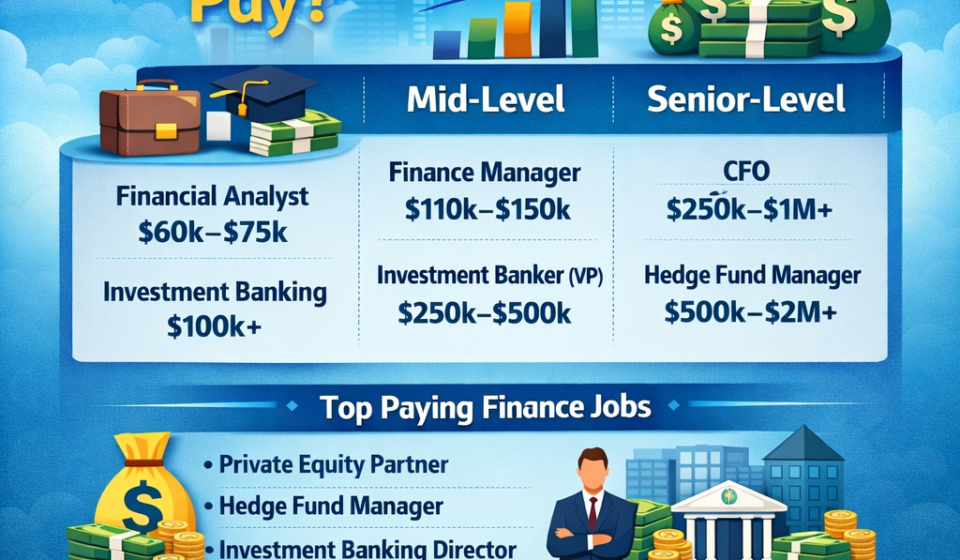
1. Financial Analyst
Average Salary: $60,000–$75,000
Responsibilities:
-
Budget analysis
-
Forecasting
-
Financial modeling
-
Data reporting
Financial analysts are one of the most common entry points into finance.
2. Accountant
Average Salary: $55,000–$70,000
Entry-level accountants work in:
-
Public accounting firms
-
Corporate accounting departments
-
Government agencies
A CPA designation can increase earnings significantly.
3. Banking Associate (Commercial Banking)
Average Salary: $50,000–$65,000
Often includes performance-based bonuses.
4. Junior Investment Banking Analyst
Average Base Salary: $100,000+
With Bonus: $130,000–$160,000
Investment banking pays significantly more—but expect 70–100 hour work weeks.
Why Entry-Level Pay Varies
Factors include:
-
University reputation
-
Internship experience
-
Technical skills (Excel, financial modeling)
-
Location (New York vs. smaller cities)
-
Industry demand
Mid-Level Finance Salaries (5–10 Years Experience)
At this stage, compensation grows significantly.
Financial Analyst (Senior)
Salary: $85,000–$120,000
Many transition into:
-
Finance Manager roles
-
FP&A leadership
-
Strategy positions
Corporate Finance Manager
Salary: $110,000–$150,000
Responsible for:
-
Capital allocation
-
Financial strategy
-
Executive reporting
Financial Advisor
Salary: $90,000–$200,000+
Income depends heavily on commission and client base.
Top advisors can earn well over $300,000 annually.
Investment Banker (Associate / VP)
Base Salary: $150,000–$200,000
Total Compensation: $250,000–$500,000+
Bonuses are often equal to or greater than base salary.
Senior-Level & Executive Finance Salaries
Now we’re talking serious compensation.
Director of Finance
Salary: $150,000–$250,000
Often includes stock options.
Chief Financial Officer (CFO)
Base Salary: $250,000–$500,000
Total Compensation: $500,000–$1M+
In large public companies, CFOs can earn several million annually.
Private Equity & Hedge Fund Roles
Senior professionals can earn:
-
$300,000 to several million annually
-
Significant performance bonuses
-
Carried interest (profit share)
These roles are competitive but extremely lucrative.
Highest Paying Finance Jobs
If your goal is maximum income, these are among the highest-paying roles:
-
Private Equity Partner
-
Hedge Fund Manager
-
Investment Banking Managing Director
-
CFO of Public Company
-
Portfolio Manager
-
Quantitative Analyst (Quant)
Quant professionals in hedge funds can earn $400,000+ annually.
What Do Finance Jobs Pay by Industry?
Finance professionals work in many sectors.
| Industry | Average Salary Range |
|---|---|
| Investment Banking | Very High |
| Private Equity | Extremely High |
| Corporate Finance | Moderate to High |
| Government Finance | Moderate |
| Non-Profit | Lower |
| FinTech | High |
| Insurance | Moderate |
Investment firms pay more but demand more.
Location Matters: Salary by City
Finance pay varies significantly by location.
High-Paying Cities (USA)
-
New York
-
San Francisco
-
Chicago
-
Boston
Salaries in New York can be 20–40% higher than the national average.
However, cost of living is also much higher.
Bonuses, Commissions & Total Compensation
When asking “what do finance jobs pay?”, you must consider:
1. Performance Bonuses
Common in:
-
Investment banking
-
Asset management
-
Corporate finance
2. Commissions
Common in:
-
Financial advising
-
Sales roles
3. Stock Options & Equity
Common in:
-
FinTech
-
Executive roles
-
Startups
In many finance jobs, base salary is only part of total earnings.
How Education Impacts Finance Salary
Your degree matters.
Bachelor’s Degree (Finance, Accounting, Economics)
Minimum requirement for most roles.
MBA
Can increase salary by $30,000–$100,000+ depending on school.
Top-tier MBA grads entering investment banking or consulting can earn $200,000+ in total compensation immediately.
Certifications That Boost Salary
-
CPA (Certified Public Accountant)
-
CFA (Chartered Financial Analyst)
-
CFP (Certified Financial Planner)
-
FRM (Financial Risk Manager)
A CFA designation can increase earning potential significantly in asset management.
Finance Salary Growth Over Time
Here’s a typical corporate finance path:
-
Analyst: $65,000
-
Senior Analyst: $90,000
-
Finance Manager: $120,000
-
Director: $180,000
-
CFO: $300,000+
Growth depends on:
-
Performance
-
Leadership ability
-
Networking
-
Technical skills
-
Industry
What Affects Finance Job Pay?
Several variables influence compensation:
1. Specialization
Investment roles pay more than accounting roles.
2. Company Size
Large corporations pay more.
3. Performance
Bonuses can double total compensation.
4. Technical Skills
Advanced Excel, SQL, Python, financial modeling = higher pay.
5. Negotiation Skills
Many finance professionals leave money on the table.
Is Finance a High-Paying Career?
Yes—but with trade-offs.
Pros
-
Strong earning potential
-
Career growth opportunities
-
Job stability
-
Transferable skills
-
Global demand
Cons
-
Long hours (especially in banking)
-
High stress
-
Performance pressure
-
Competitive environment
Finance can be highly rewarding—but it isn’t easy money.
Real-World Salary Example
Let’s compare two professionals:
Example 1: Corporate Finance Professional
-
8 years experience
-
Finance Manager at mid-sized company
-
Salary: $125,000
-
Bonus: $20,000
-
Total: $145,000
Example 2: Investment Banker (VP)
-
8 years experience
-
Base: $180,000
-
Bonus: $220,000
-
Total: $400,000
The difference? Industry and compensation structure.
Frequently Asked Questions (FAQs)
What do finance jobs pay starting out?
Entry-level finance jobs typically pay between $50,000 and $75,000 annually. Investment banking roles may start above $100,000 including bonuses.
What finance job pays the most?
Private equity partners, hedge fund managers, and investment banking managing directors earn the highest salaries—often $500,000 to several million annually.
Is finance a six-figure career?
Yes. Many finance professionals reach six figures within 5–10 years, especially in corporate finance, banking, and asset management.
Do finance jobs pay more than accounting?
Generally, yes. Investment and corporate finance roles typically pay more than traditional accounting roles, though CPAs can earn strong incomes.
Is finance a good career in 2026?
Yes. Finance remains a stable, high-demand field with strong earning potential and global opportunities.
Featured Snippet: What Do Finance Jobs Pay?
Finance jobs pay between $50,000 and over $500,000 annually depending on experience, specialization, industry, and location. Entry-level roles typically start around $60,000, while senior finance executives and investment professionals can earn several hundred thousand dollars or more, including bonuses and equity compensation.
Final Thoughts: Is Finance Worth It?
So, what do finance jobs pay?
The short answer: very well—if you choose the right path and commit to developing your skills.
Finance offers:
-
High earning ceilings
-
Multiple career paths
-
Global opportunities
-
Performance-based upside
But success requires:
-
Technical expertise
-
Long hours early on
-
Strong work ethic
-
Continuous learning
If you’re strategic about your specialization, education, and networking, finance can be one of the most financially rewarding careers available.