
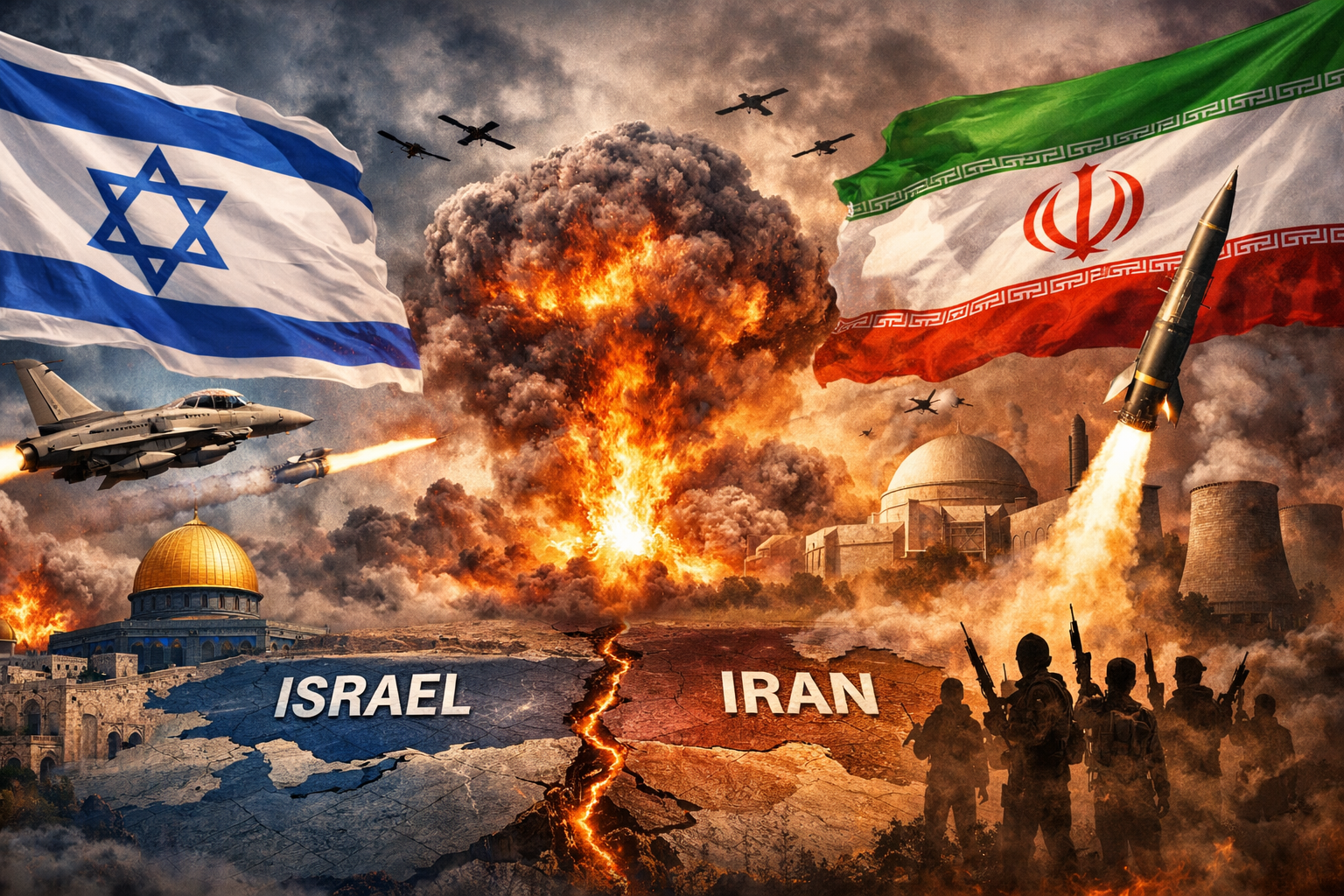

Why Did Israel Attack Iran? A Complete Geopolitical Analysis
The question “Why did Israel attack Iran?” has become one of the most searched geopolitical queries in recent years. Rising tensions between Israel and Iran have repeatedly pushed the Middle East toward potential regional conflict, capturing global attention and concern.
To understand this issue, it’s important to move beyond headlines and examine the deeper strategic, political, military, and ideological factors that drive the rivalry between the two countries.
This article explores why Israel attacks Iran, the history behind their conflict, the role of nuclear weapons, regional power struggles, and the potential global consequences. Whether you are a beginner trying to understand Middle Eastern geopolitics or a professional seeking deeper insight, this comprehensive guide covers the topic from multiple angles.
Table of Contents
-
Introduction to Israel–Iran Conflict
-
Historical Background of Israel and Iran Relations
-
When Did Tensions Begin?
-
Why Israel Sees Iran as a Major Threat
-
Iran’s Nuclear Program and Israel’s Concerns
-
Proxy Wars in the Middle East
-
Military Strikes and Cyber Warfare
-
Role of Hezbollah, Hamas, and Regional Militias
-
Israel’s Strategic Doctrine Against Iran
-
Global Powers and Their Influence
-
Economic and Political Factors
-
Risks of a Full-Scale War
-
Impact on the Middle East and Global Security
-
Real-World Examples of Israel-Iran Confrontations
-
Possible Future Scenarios
-
Frequently Asked Questions
-
Conclusion & Key Takeaways
Introduction to Israel–Iran Conflict
The conflict between Israel and Iran is one of the most complex geopolitical rivalries in the modern world. While the two countries do not share a direct border, their conflict stretches across the Middle East through intelligence operations, proxy wars, cyber attacks, and occasional military strikes.
When people ask “Why did Israel attack Iran?”, they are usually referring to several types of operations:
-
Airstrikes on Iranian military positions
-
Attacks on Iranian nuclear facilities
-
Cyber operations targeting nuclear infrastructure
-
Assassinations of nuclear scientists
-
Military strikes on Iranian-backed militias
Israel believes these actions are necessary to prevent Iran from gaining nuclear weapons and expanding its regional influence.
Iran, on the other hand, views Israel as an illegitimate state and supports groups that oppose Israeli policies in the region.
The result is a shadow war that has been ongoing for decades.
Historical Background of Israel–Iran Relations
Interestingly, Israel and Iran were not always enemies.
Before 1979, relations between the two countries were relatively friendly.
During the rule of the Shah of Iran, Iran maintained diplomatic and economic ties with Israel.
However, everything changed after the 1979 Islamic Revolution.
The new Iranian leadership adopted a strong anti-Israel stance and declared Israel an illegitimate state.
This ideological shift transformed Iran from a regional partner into one of Israel’s biggest strategic threats.
When Did Tensions Between Israel and Iran Begin?
The modern Israel-Iran conflict began after the Islamic Revolution in Iran in 1979.
The new government led by Ayatollah Ruhollah Khomeini redefined Iran’s foreign policy around opposition to Israel and Western influence.
Key developments that intensified tensions include:
-
Iran’s support for anti-Israel militant groups
-
Israel’s concerns about Iran’s nuclear ambitions
-
Proxy wars across Syria, Lebanon, and Gaza
-
Cyber attacks and intelligence operations
Since the early 2000s, tensions escalated further due to Iran’s nuclear program.
Why Israel Sees Iran as a Major Threat
Israel considers Iran its most serious long-term security threat.
Several factors contribute to this perception.
1. Nuclear Weapons Concerns
Israel fears that Iran is attempting to develop nuclear weapons.
A nuclear-armed Iran could dramatically shift the balance of power in the Middle East.
Israel believes that preventing Iran from obtaining nuclear weapons is a matter of national survival.
2. Anti-Israel Ideology
Iran’s leadership frequently criticizes Israel and supports movements opposing Israeli policies.
This rhetoric increases distrust and hostility between the two countries.
3. Regional Expansion
Iran has expanded its influence across the Middle East through allied groups and militias.
Countries where Iran has influence include:
-
Syria
-
Lebanon
-
Iraq
-
Yemen
-
Gaza
Israel views this network as a strategic encirclement.
Iran’s Nuclear Program and Israel’s Concerns
One of the biggest reasons behind Israel’s military actions is Iran’s nuclear program.
Iran states that its nuclear program is designed for peaceful energy purposes.
However, Israel and several Western countries believe Iran may be pursuing nuclear weapons capability.
Why Israel Is Concerned
If Iran acquires nuclear weapons, several risks arise:
-
Increased regional arms race
-
Greater deterrence against Israeli military action
-
Increased support for proxy groups
Israel has historically taken strong action to stop nuclear threats.
Examples include:
-
Strike on Iraq’s nuclear reactor (1981)
-
Strike on Syria’s nuclear facility (2007)
Many analysts believe Israel may take similar action if Iran moves closer to nuclear weapon capability.
Proxy Wars in the Middle East
Israel and Iran rarely fight directly.
Instead, much of their conflict happens through proxy wars.
What Is a Proxy War?
A proxy war occurs when countries support opposing groups or militias instead of fighting directly.
This strategy allows them to compete without triggering full-scale war.
Iran’s Key Regional Allies
Iran supports several groups across the Middle East:
-
Hezbollah in Lebanon
-
Militias in Iraq
-
Groups in Syria
-
Houthi forces in Yemen
-
Hamas in Gaza
Israel considers many of these groups hostile and has carried out strikes against their infrastructure.
Military Strikes and Cyber Warfare
The Israel-Iran conflict includes both physical and digital warfare.
Airstrikes
Israel has conducted numerous strikes targeting Iranian military assets, particularly in Syria.
These strikes aim to prevent Iran from building military bases close to Israeli territory.
Cyber Attacks
Cyber warfare has become an important battlefield.
One famous example involved a cyber operation targeting Iran’s nuclear facilities.
Cyber warfare allows countries to disrupt infrastructure without traditional military engagement.
Role of Hezbollah, Hamas, and Regional Militias
Iran’s influence in the region heavily relies on allied organizations.
These groups serve as strategic deterrents against Israel.
Hezbollah
Hezbollah, based in Lebanon, is one of Iran’s most powerful allies.
It possesses thousands of rockets capable of reaching Israeli cities.
Hamas
Hamas governs Gaza and has fought multiple conflicts with Israel.
While Hamas has its own political agenda, it also receives support from Iran.
These alliances create a multi-front security challenge for Israel.
Israel’s Strategic Doctrine Against Iran
Israel’s security strategy includes preventive military action.
This doctrine is sometimes described as the “Begin Doctrine.”
The core principle is simple:
Israel will not allow hostile states in the region to develop nuclear weapons.
This policy has guided several historical military operations.
Israel believes early intervention is necessary to avoid larger conflicts later.
Global Powers and Their Influence
The Israel-Iran conflict also involves major global powers.
United States
The United States is Israel’s strongest ally and provides:
-
Military aid
-
Intelligence cooperation
-
Diplomatic support
Russia
Russia maintains relations with both Israel and Iran, particularly in Syria.
China
China has expanded economic ties with Iran while maintaining relations with Israel.
These global dynamics complicate efforts to resolve tensions.
Economic and Political Factors
Beyond security concerns, economic and political factors also influence tensions.
Sanctions on Iran
Iran has faced heavy international sanctions, particularly related to its nuclear program.
These sanctions impact:
-
Oil exports
-
Banking
-
Trade relations
Domestic Politics
Leaders in both countries sometimes take strong positions for domestic political reasons.
Geopolitical conflicts can influence national unity and political support.
Risks of a Full-Scale War
One of the biggest global concerns is the possibility of direct war between Israel and Iran.
Such a conflict could escalate rapidly.
Potential consequences include:
-
Regional war across the Middle East
-
Disruption of global oil supply
-
Increased involvement of major powers
-
Humanitarian crises
Because of these risks, most confrontations remain limited or indirect.
Impact on the Middle East and Global Security
The Israel-Iran rivalry affects not only the two countries but the entire region.
Regional Instability
Conflicts in Syria, Lebanon, and Gaza are often connected to this rivalry.
Energy Markets
The Middle East plays a major role in global oil supply.
Military conflict can influence oil prices and global markets.
Security Alliances
Countries in the region often align themselves with either Israel or Iran.
This creates shifting alliances and strategic competition.
Real-World Examples of Israel–Iran Confrontations
Several incidents highlight the ongoing conflict.
Airstrikes in Syria
Israel has conducted repeated strikes against Iranian military targets in Syria.
Cyber Operations
Cyber attacks targeting nuclear facilities and infrastructure have been widely reported.
Maritime Tensions
Both countries have been linked to attacks on shipping vessels.
These events illustrate the ongoing shadow conflict.
Possible Future Scenarios
Several scenarios could shape the future of Israel-Iran relations.
Diplomatic Resolution
International negotiations could limit Iran’s nuclear activities.
Continued Shadow War
The current pattern of covert operations and limited strikes may continue.
Direct Military Conflict
Although unlikely in the near term, escalation could lead to direct war.
Global diplomatic efforts aim to prevent this outcome.
Frequently Asked Questions (FAQs)
Why did Israel attack Iran?
Israel has conducted operations targeting Iran primarily due to concerns about Iran’s nuclear program and its support for anti-Israel militant groups across the Middle East.
Is Israel and Iran officially at war?
No. Israel and Iran are not officially at war, but they are engaged in a long-running shadow conflict involving cyber attacks, proxy groups, and limited military strikes.
Why is Iran against Israel?
Iran’s government has opposed Israel since the 1979 Islamic Revolution, viewing it as illegitimate and criticizing its policies in the Palestinian territories.
Could Israel launch a full attack on Iran?
While Israel has the military capability, a full-scale attack would carry major risks, including regional war and international consequences.
What countries support Israel and Iran?
Israel is strongly supported by the United States and several Western countries. Iran has strategic partnerships with groups and governments in parts of the Middle East.
Conclusion: Understanding the Israel–Iran Conflict
The question “Why did Israel attack Iran?” cannot be answered with a single explanation.
Instead, it reflects decades of political, ideological, and strategic rivalry between two powerful regional actors.
The key drivers include:
-
Iran’s nuclear program
-
Regional proxy conflicts
-
ideological opposition
-
security concerns
-
geopolitical competition
While direct war remains unlikely due to the massive risks involved, the shadow conflict between Israel and Iran continues to shape Middle Eastern politics and global security.
Understanding these dynamics is essential for anyone interested in international relations, geopolitics, and global stability.