












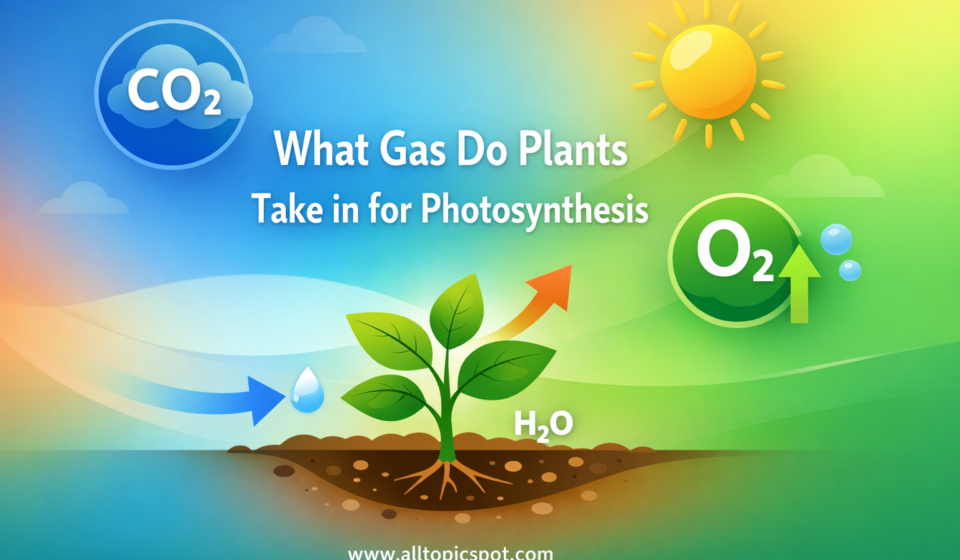
What Gas Do Plants Take in for Photosynthesis? A Complete Guide

What Gas Do Plants Take in for Photosynthesis? A Complete Guide
Introduction
Have you ever wondered how plants “breathe” and produce their own food? Unlike humans who inhale oxygen, plants rely on a completely different gas for survival. This gas is crucial for photosynthesis – the process by which plants convert light energy into chemical energy. Understanding which gas plants take in for photosynthesis is not only fundamental to biology but also vital for agriculture, environmental science, and climate studies.
In this comprehensive guide, we’ll cover everything from the basics to advanced insights about photosynthesis, the essential gases involved, and practical implications for ecosystems and humans alike.
Table of Contents
What is Photosynthesis?
Photosynthesis is the process by which green plants, algae, and certain bacteria convert sunlight, water, and carbon dioxide into glucose (sugar) and oxygen. This process is essential for life on Earth because it forms the foundation of the food chain and regulates atmospheric gases.
Key Points:
-
Occurs mainly in the chloroplasts of plant cells.
-
Requires chlorophyll, the green pigment that captures light energy.
-
Produces glucose for plant growth and oxygen as a byproduct.
Formula for Photosynthesis:
6CO2+6H2O+lightenergy→C6H12O6+6O26 CO_2 + 6 H_2O + light energy → C_6H_{12}O_6 + 6 O_2
This formula highlights the critical role of carbon dioxide (CO₂) – the gas plants absorb from the atmosphere.
Which Gas Do Plants Take In for Photosynthesis?
The gas that plants primarily take in for photosynthesis is carbon dioxide (CO₂).
Why Carbon Dioxide?
-
CO₂ is a key carbon source for building glucose molecules.
-
Without CO₂, plants cannot produce enough food to survive.
-
Photosynthesis helps reduce atmospheric CO₂, mitigating climate change effects.
Plants absorb CO₂ through tiny pores in their leaves called stomata, which act like gateways for gases.
Fun Fact: A mature leafy tree can absorb 48 pounds of CO₂ per year, significantly contributing to carbon sequestration.
The Role of Carbon Dioxide in Photosynthesis
Carbon dioxide is more than just a gas – it’s the backbone of plant energy production. Here’s how it works:
-
Absorption: CO₂ enters leaves via stomata.
-
Conversion: In the Calvin cycle, CO₂ molecules combine with hydrogen (from water) to form glucose.
-
Energy Storage: Glucose stores chemical energy, fueling plant growth and reproduction.
Table: Carbon Dioxide vs Oxygen in Plants
| Gas | Role in Plants | Source | Byproduct? |
|---|---|---|---|
| Carbon Dioxide (CO₂) | Used to make glucose (food) | Atmosphere | Oxygen |
| Oxygen (O₂) | Released during photosynthesis | Produced by chloroplasts | N/A |
| Water Vapor (H₂O) | Released during transpiration | Soil via roots | N/A |
How Plants Absorb Gases
Plants don’t have noses or lungs. They use specialized structures:
1. Stomata
-
Small openings mostly on the underside of leaves.
-
Regulate gas exchange and water loss.
-
Open during the day to absorb CO₂, close at night to conserve water.
2. Leaf Structure
-
Spongy mesophyll cells create air spaces for CO₂ diffusion.
-
Chloroplasts within these cells capture light energy.
3. Root Interaction
-
Although roots mainly absorb water and minerals, soil microbes can affect CO₂ availability indirectly.
Other Gases in Photosynthesis
While CO₂ is the main gas, plants also interact with others:
-
Oxygen (O₂): Produced as a byproduct and released into the atmosphere.
-
Water vapor (H₂O): Released during transpiration.
-
Nitrogen (N₂) and Trace Gases: Indirectly support growth via nutrient cycles.
Pro Tip: While CO₂ is crucial, insufficient water or light can limit photosynthesis even if CO₂ is abundant.
Factors Affecting Gas Absorption
Plants’ ability to take in CO₂ depends on several factors:
-
Light Intensity: Higher light speeds up photosynthesis.
-
CO₂ Concentration: More CO₂ generally means higher sugar production, up to a saturation point.
-
Temperature: Optimal temperatures improve enzyme activity in photosynthesis.
-
Water Availability: Water stress can close stomata, reducing CO₂ intake.
-
Air Pollution: Sulfur dioxide, ozone, and particulate matter can damage stomata.
Benefits of Photosynthesis to Life on Earth
-
Oxygen Production: Essential for human and animal survival.
-
Food Production: Basis of all plant-based diets and animal food chains.
-
Carbon Regulation: Helps stabilize atmospheric CO₂ levels.
-
Renewable Energy Source: Biomass from photosynthesis fuels bioenergy.
-
Climate Mitigation: Trees act as natural carbon sinks.
Real-world Example:
-
Amazon Rainforest: Absorbs approximately 2.2 billion tons of CO₂ per year, sustaining global carbon balance.
Common Misconceptions About Plant Gas Intake
-
“Plants take in oxygen to survive.”
✅ Partially true – they also perform respiration, but CO₂ is for photosynthesis. -
“Plants only absorb CO₂ during the day.”
✅ Mostly true; stomata open in daylight, but some CAM plants absorb CO₂ at night. -
“More CO₂ always means faster growth.”
❌ Only if other factors (light, water, nutrients) are adequate.
Advanced Insights for Professionals
For botanists, agronomists, or environmentalists:
-
CAM Photosynthesis: Plants like cacti absorb CO₂ at night to conserve water.
-
C4 Pathway: Grasses like maize efficiently capture CO₂ in hot, sunny conditions.
-
CO₂ Enrichment in Greenhouses: Increases crop yields by 15–30% under controlled conditions.
-
Carbon Isotope Tracing: Researchers track CO₂ uptake using isotopes to study plant metabolism.
FAQs
Q1: What gas do plants breathe in for photosynthesis?
A: Plants take in carbon dioxide (CO₂) through their leaves. CO₂ is essential for producing glucose during photosynthesis.
Q2: Do plants need oxygen for photosynthesis?
A: No, oxygen is a byproduct of photosynthesis, not a requirement. Plants do use oxygen for cellular respiration.
Q3: Can plants survive without CO₂?
A: No, CO₂ is essential for making glucose. Without it, plants cannot photosynthesize effectively.
Q4: How do stomata help plants absorb gases?
A: Stomata are tiny openings in leaves that allow CO₂ to enter and oxygen to exit while regulating water loss.
Q5: Does increasing CO₂ levels speed up photosynthesis?
A: It can, but only if light, water, and nutrients are sufficient. Excess CO₂ alone won’t guarantee faster growth.
Conclusion and Actionable Takeaways
Understanding what gas plants take in for photosynthesis is fundamental to biology, agriculture, and climate science. Carbon dioxide is the lifeblood of photosynthesis, enabling plants to create food, release oxygen, and support all life on Earth.
Actionable Insights:
-
Gardeners & Farmers: Optimize CO₂, light, and water for better crop yields.
-
Environmentalists: Protect forests to maintain natural CO₂ absorption.
-
Students & Educators: Use this knowledge for practical experiments and climate studies.
Key Takeaway: Photosynthesis is not just a plant process—it’s a global life-support system. Understanding the gases involved empowers us to protect ecosystems, improve agriculture, and combat climate change.