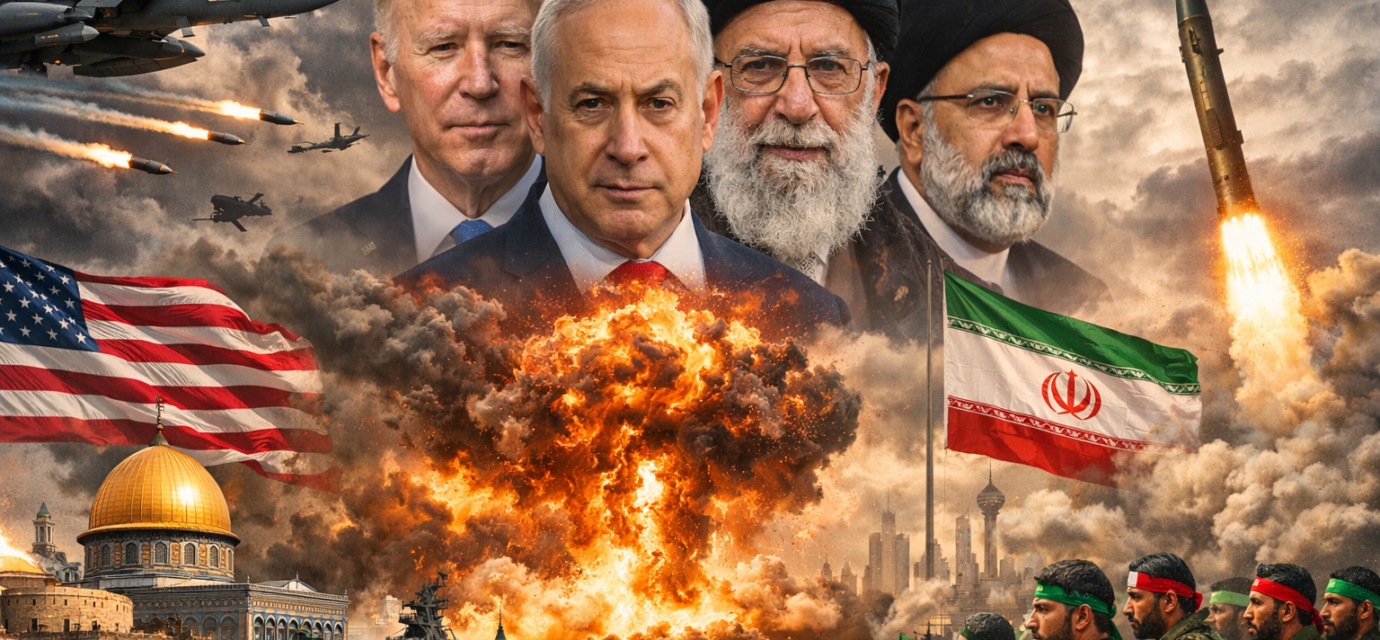










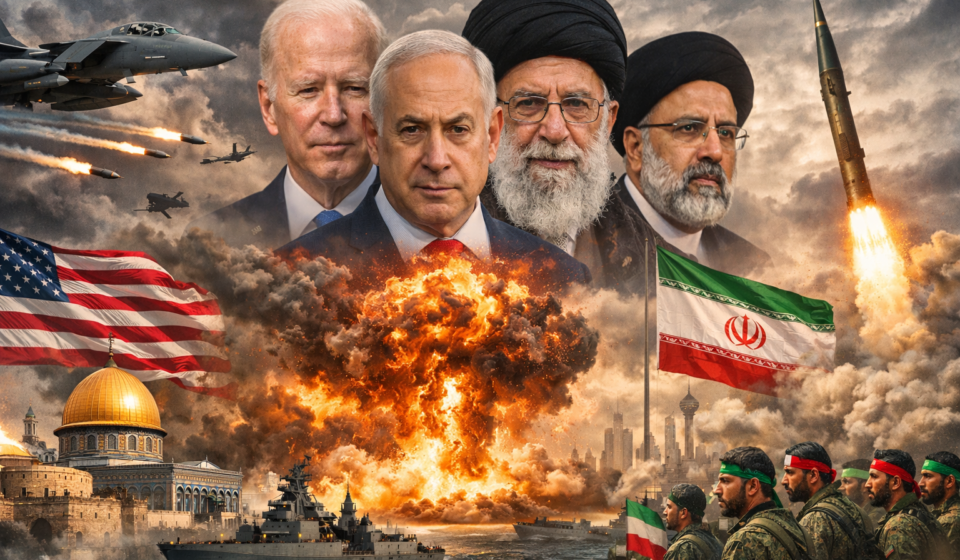
US–Israel War on Iran: Causes, Risks & Global Impact

US–Israel War on Iran — Everything You Need to Know
The possibility of a US–Israel war on Iran has become one of the most discussed geopolitical risks in recent years. With rising tensions in the Middle East, nuclear concerns, proxy conflicts, and shifting global alliances, many people—from casual readers to policy experts—are asking the same question:
Is a war between the US, Israel, and Iran likely—and what would it mean for the world?
This comprehensive guide breaks it all down in simple yet authoritative terms, covering everything from historical context to future scenarios, risks, and global consequences.
What Is the US–Israel War on Iran? (Quick Overview)
The term refers to a potential military conflict involving the United States and Israel against Iran, primarily driven by:
- Iran’s nuclear program
- Regional power struggles in the Middle East
- Proxy conflicts (Lebanon, Syria, Iraq, Yemen)
- Security concerns of Israel
- Strategic interests of the United States
Featured Snippet Answer:
A US–Israel war on Iran would be a major regional or global conflict involving military action aimed at limiting Iran’s nuclear and military capabilities, potentially escalating into a broader Middle East war.
Historical Background — How Did We Get Here?
The roots of this tension go back decades. After the Iranian Revolution in 1979, Iran shifted from being a close ally of the United States to one of its strongest adversaries. The US embassy hostage crisis set the tone for a long-standing conflict marked by sanctions, diplomatic isolation, and mutual distrust.
At the same time, Israel began to view Iran as its primary regional threat. Iran’s support for anti-Israel groups and its growing missile capabilities deepened this rivalry. Over time, this evolved into a “shadow conflict” involving cyber operations, intelligence activities, and indirect military confrontations.
The 2015 nuclear deal briefly reduced tensions, but when the US withdrew in 2018, the situation deteriorated again. Iran resumed uranium enrichment, and trust between all parties collapsed, bringing the region back to a state of uncertainty.
Why Would the US and Israel Attack Iran?
The most critical factor is Iran’s nuclear program. There are ongoing concerns that Iran could develop nuclear weapons, which would significantly alter the balance of power in the Middle East.
Beyond nuclear concerns, Iran’s regional influence is a major issue. Through proxy groups in Lebanon, Iraq, Syria, and Yemen, Iran has built a network that extends its power far beyond its borders. This creates constant tension with both Israel and US interests in the region.
Israel’s military doctrine also plays a role. It emphasizes preemptive action, meaning it may strike before a perceived threat becomes imminent. For the United States, the focus is broader: maintaining regional stability, protecting allies, and ensuring global energy security.
How Could a War Start? (Possible Triggers)
A full-scale war would likely begin through escalation rather than a sudden declaration.
One possible trigger is a nuclear breakout scenario, where Iran is perceived to be close to developing a nuclear weapon. Another is a preemptive Israeli strike on Iranian nuclear facilities, which could provoke immediate retaliation.
Proxy conflicts are another pathway. A clash involving Hezbollah or Iranian-backed militias could quickly spiral into direct confrontation. There’s also the risk of accidental conflict—such as a naval incident in the Persian Gulf—that escalates beyond control.
Military Capabilities Comparison
| Factor | United States | Israel | Iran |
|---|---|---|---|
| Military Budget | Extremely High | High | Moderate |
| Nuclear Weapons | Yes | Undeclared (assumed) | No confirmed |
| Air Power | Global dominance | Advanced | Limited but improving |
| Missile Systems | Advanced | Highly advanced | Strong ballistic missiles |
| Proxy Forces | Limited | Minimal | Extensive |
A key insight here is that Iran does not need to match the US or Israel directly. Instead, it relies on asymmetric warfare, proxy forces, and geographic advantages to counter stronger opponents.
What Would a War Look Like? (Realistic Scenario)
The conflict would likely unfold in phases. It could begin with airstrikes targeting nuclear and military facilities in Iran. Israel would likely lead initial strikes, with possible support from the United States.
Iran would then retaliate using missile systems, targeting Israeli cities and US military bases in the region. This could quickly expand as proxy groups join the conflict, opening multiple fronts across the Middle East.
As the conflict spreads, global consequences would emerge. Oil supplies could be disrupted, shipping routes threatened, and international markets destabilized.
Global Consequences of a US–Israel War on Iran
One of the most immediate impacts would be on global energy markets. The Strait of Hormuz, a critical oil route, could be blocked or disrupted, causing oil prices to surge dramatically.
Economic effects would follow quickly. Inflation could rise worldwide, supply chains could be disrupted, and financial markets could experience volatility. In regions closer to the conflict, the humanitarian impact could be severe, including civilian casualties and displacement.
Cyber warfare is another major risk. Iran has developed capabilities that could target infrastructure, financial systems, and government networks globally.
Risks of Escalation Into World War
A major concern is the involvement of other global powers. Russia and China could support Iran diplomatically or strategically, while NATO allies might align with the United States.
Although a full-scale world war remains unlikely, the possibility increases if multiple major powers become directly involved. Even limited escalation could reshape global geopolitics for years.
Benefits (From Strategic Perspectives)
From a purely strategic standpoint, some policymakers argue there could be limited benefits. Israel might eliminate a perceived nuclear threat, while the US could reinforce its influence in the region.
However, these potential advantages are highly uncertain and come with enormous risks, making them controversial even among experts.
Risks and Downsides (Major Concerns)
The downsides of such a conflict are overwhelming:
- High civilian casualties
- Long-term regional instability
- Increased terrorism risks
- Economic disruption on a global scale
- Loss of diplomatic credibility
These risks are why many analysts consider war a last resort.
Real-World Examples of Similar Conflicts
Looking at past conflicts helps illustrate potential outcomes. The Iraq War in 2003 showed how quickly a military victory can turn into long-term instability. The Syrian conflict demonstrated how proxy wars can draw in multiple global powers. The 2006 Israel–Hezbollah war highlighted how rapidly regional conflicts can escalate.
Current Situation (2025–2026 Trends)
Recent years have seen increased military activity, rising tensions in proxy regions, and ongoing concerns about Iran’s nuclear program. Diplomatic efforts continue, but progress remains fragile.
Is War Likely? Expert Analysis
The short answer is that war is possible but not inevitable.
It could happen due to nuclear escalation, miscalculations, or political pressure. However, it may be avoided due to the high economic costs, global risks, and the availability of diplomatic alternatives.
How This Affects You (Global Perspective)
Even if you live far from the Middle East, the effects could still be significant:
- Rising fuel prices
- Increased cost of living
- Market volatility
- Potential security concerns
Globalization ensures that regional conflicts have worldwide consequences.
Preventing War — Is Diplomacy Still Possible?
Diplomacy remains the most viable solution. Renewed agreements, back-channel negotiations, and regional cooperation could help reduce tensions.
While difficult, peaceful resolution is still achievable and widely preferred by the international community.
FAQs (People Also Ask)
Why do the US and Israel oppose Iran?
They are concerned about Iran’s nuclear ambitions, regional influence, and threats to Israel’s security.
Does Iran have nuclear weapons?
There is no confirmed evidence that Iran currently possesses nuclear weapons, though it has the capability to develop them.
Could this war become World War 3?
It is unlikely but possible if multiple major powers become directly involved.
Who would win a US–Israel vs Iran war?
Militarily, the US–Israel alliance has a clear advantage, but Iran could create prolonged instability.
How would this affect oil prices?
Oil prices would likely rise sharply due to supply disruptions.
Key Takeaways (Actionable Insights)
- A US–Israel war on Iran is a high-impact but uncertain risk
- Nuclear tensions remain the central issue
- The global economy would be significantly affected
- Diplomacy is still the best solution
- Staying informed helps individuals prepare for indirect impacts
Conclusion
The possibility of a US–Israel war on Iran is no longer just a theoretical scenario—it is a real geopolitical risk closely monitored worldwide.
While the chances of full-scale war remain uncertain, the underlying tensions are real and evolving. The balance between military strategy and diplomacy will determine the future of the region and its impact on the global stage.
For now, the world watches carefully, hoping that diplomacy, not conflict, will shape what comes next.
