
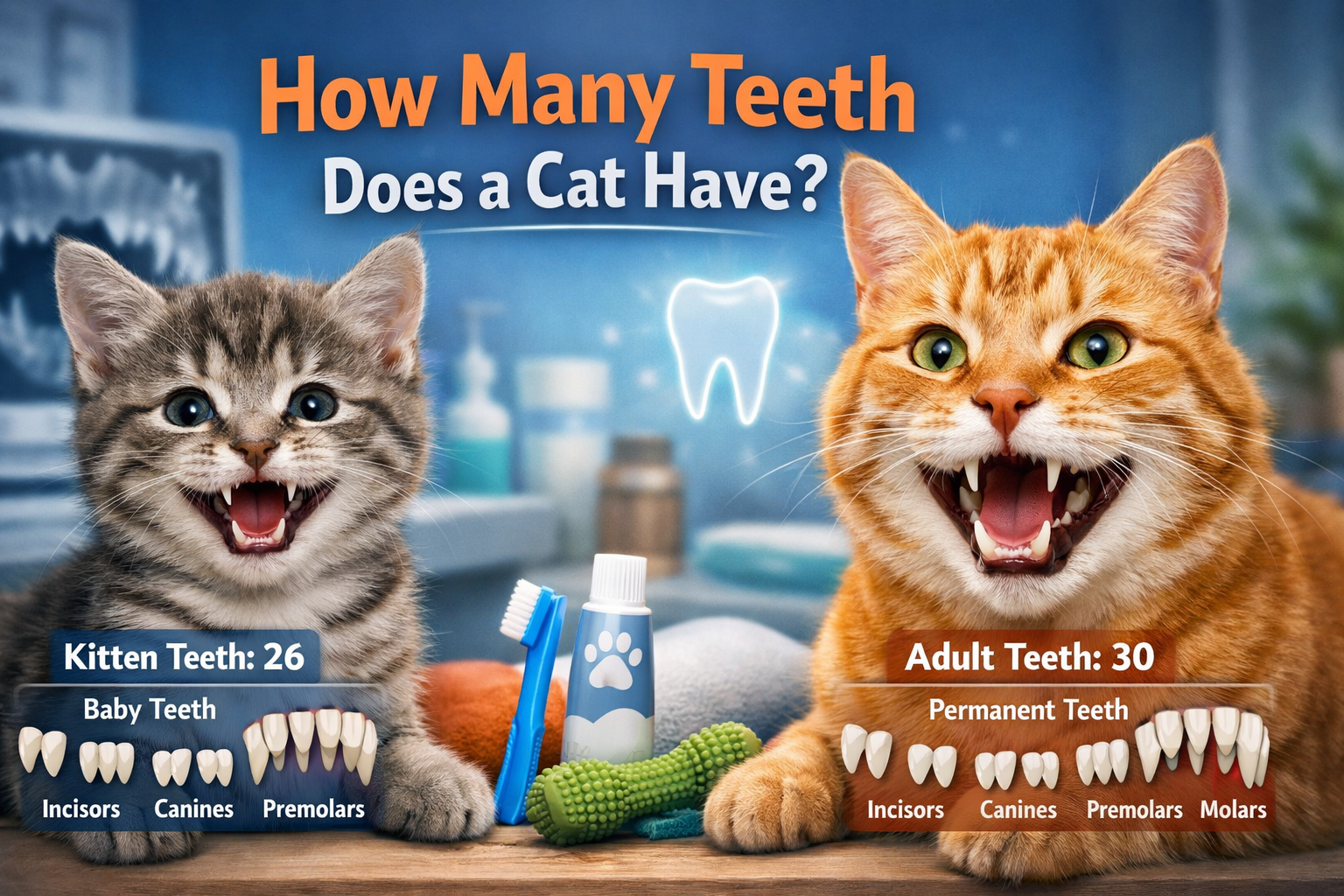

How Many Teeth Does a Cat Have? Complete Guide
How Many Teeth Does a Cat Have? (Complete Expert Guide)
If you’ve ever looked closely at your cat’s mouth during a yawn (or a bite!), you may have wondered: how many teeth does a cat have?
The answer isn’t as simple as one number—because it depends on the cat’s age.
-
Kittens: 26 teeth
-
Adult cats: 30 teeth
But that’s just the beginning.
In this comprehensive guide, we’ll go far beyond the basic answer. You’ll learn how cat teeth develop, what each type does, common dental problems, and how to keep your cat’s teeth healthy for life.
🦷 Quick Answer (Featured Snippet)
How many teeth does a cat have?
-
Kittens have 26 baby teeth (deciduous teeth)
-
Adult cats have 30 permanent teeth
🐾 Understanding Cat Teeth: The Basics
Cats are obligate carnivores, meaning their teeth are designed specifically for hunting, tearing, and consuming meat.
Unlike humans, cats don’t chew food in a grinding motion. Instead, their teeth are sharp and specialized for:
-
Grabbing prey
-
Killing efficiently
-
Tearing meat into chunks
🐱 Kitten Teeth: How Many Teeth Do Kittens Have?
🦷 Number of Teeth in Kittens
Kittens are born without teeth, but they quickly develop:
| Age | Development Stage |
|---|---|
| 0–2 weeks | No teeth |
| 2–4 weeks | Baby teeth begin appearing |
| 8 weeks | Full set of 26 teeth |
👉 Total kitten teeth: 26
🧩 Types of Kitten Teeth
Kittens have three types of baby teeth:
-
Incisors (12) – Small front teeth for nibbling
-
Canines (4) – Sharp fangs for gripping
-
Premolars (10) – Used for cutting food
❌ Kittens do not have molars yet.
😸 Teething in Kittens
Teething usually begins around 3–4 months and finishes by 6 months.
Signs of Teething:
-
Chewing on objects
-
Drooling
-
Mild gum irritation
-
Slight behavioral changes
💡 Tip: Provide soft chew toys to ease discomfort.
🐈 Adult Cat Teeth: How Many Teeth Do Cats Have?
🦷 Number of Teeth in Adult Cats
Once a kitten grows, their baby teeth are replaced with permanent teeth.
👉 Total adult cat teeth: 30
🧩 Types of Adult Cat Teeth
Here’s a complete breakdown:
| Tooth Type | Number | Function |
|---|---|---|
| Incisors | 12 | Grooming & nibbling |
| Canines | 4 | Hunting & killing prey |
| Premolars | 10 | Cutting meat |
| Molars | 4 | Crushing food |
🦴 Why Adult Cats Have 30 Teeth
The addition of molars is the key difference between kittens and adult cats. These help cats:
-
Break down tougher food
-
Process prey more efficiently
🧠 Why Cat Teeth Are So Sharp
Cat teeth are designed for survival in the wild.
Key Features:
-
Sharp canines: Act like daggers
-
Scissor-like premolars: Slice meat cleanly
-
Minimal grinding surfaces: Unlike humans
👉 This design is called a carnassial dentition, optimized for meat-eating animals.
📊 Kitten vs Adult Cat Teeth (Comparison Table)
| Feature | Kittens | Adult Cats |
|---|---|---|
| Total Teeth | 26 | 30 |
| Molars | ❌ No | ✅ Yes |
| Teething Phase | Yes | No |
| Tooth Strength | Weaker | Stronger |
| Function | Learning to eat | Hunting & survival |
🐾 When Do Cats Lose Their Baby Teeth?
Kittens lose their baby teeth between:
👉 3 to 6 months of age
You may not even notice it because:
-
They often swallow the teeth
-
Teeth are very small
⚠️ Common Dental Problems in Cats
Dental health is one of the most overlooked aspects of cat care.
🦷 1. Periodontal Disease
Affects 70% of cats over age 3
Symptoms:
-
Bad breath
-
Red gums
-
Tooth loss
🦷 2. Tooth Resorption
A painful condition where teeth break down internally.
Signs:
-
Drooling
-
Difficulty eating
-
Sudden food avoidance
🦷 3. Gingivitis
Early stage of gum disease.
Causes:
-
Plaque buildup
-
Poor oral hygiene
🦷 4. Broken Teeth
Often caused by:
-
Hard objects
-
Accidents
-
Fighting
🪥 How to Take Care of Your Cat’s Teeth
Proper dental care can extend your cat’s life significantly.
✅ Daily Care Tips
-
Brush teeth (2–3 times per week minimum)
-
Use cat-specific toothpaste
-
Provide dental treats
-
Offer chew toys
🏥 Professional Dental Care
-
Annual vet checkups
-
Professional cleaning when needed
💡 Cats hide pain well—regular checks are essential.
🍽️ Does Diet Affect Cat Teeth?
Absolutely.
🥩 Best Foods for Dental Health
-
High-quality dry kibble
-
Raw diets (with vet guidance)
-
Dental-specific formulas
🚫 Foods to Avoid
-
Sticky human food
-
Excess soft food without cleaning
-
Sugary treats
🧪 Interesting Facts About Cat Teeth
-
Cats have fewer teeth than dogs (42)
-
Their teeth don’t decay like humans—but gums do
-
Cats don’t get cavities often, but gum disease is common
-
A cat’s bite is strong relative to its size
🐾 Real-Life Example
A 5-year-old indoor cat with no dental care developed severe gum disease, leading to:
-
Tooth extraction
-
Chronic pain
-
High vet bills
👉 With simple brushing and checkups, this could have been prevented.
🔍 How to Check Your Cat’s Teeth at Home
Look for:
-
Yellow or brown buildup
-
Red or swollen gums
-
Missing teeth
-
Bad breath
If you notice any of these—visit a vet.
📈 Why Dental Health Matters (SEO Insight)
Poor dental health can lead to:
-
Heart disease
-
Kidney issues
-
Chronic infections
👉 It’s not just about teeth—it’s about overall health.
❓ FAQs (People Also Ask)
How many teeth do adult cats have?
Adult cats have 30 permanent teeth, including incisors, canines, premolars, and molars.
Do cats lose their teeth naturally?
Yes, kittens lose baby teeth between 3–6 months. Adult cats should not lose teeth—if they do, it’s usually due to disease.
Do cats get cavities?
Cats rarely get cavities, but they are highly prone to gum disease and tooth resorption.
Can a cat live without teeth?
Yes. Cats can adapt and eat soft food even without teeth, though dental care helps avoid this situation.
How often should I brush my cat’s teeth?
Ideally daily, but at least 2–3 times per week for good oral health.
Why does my cat have bad breath?
Bad breath is usually caused by bacteria buildup or gum disease and should not be ignored.
🧠 Expert Insight
Many cat owners assume dental care is optional—but in reality, it’s one of the most critical aspects of feline health.
A cat with healthy teeth:
-
Eats better
-
Lives longer
More Feline Dental Insights
Why Cat Teeth Are So Important
Cats are obligate carnivores, meaning their bodies are designed to consume meat. Cat teeth serve several critical purposes:
- Hunting and Catching Prey: In the wild, cats use their sharp teeth to grab and kill prey quickly.
- Tearing Meat: Unlike herbivores that grind food, cats slice meat using sharp carnassial teeth.
- Grooming: Cats use their teeth to remove debris and parasites from their fur.
- Defense: Teeth are also an essential defensive weapon when cats feel threatened.
The Carnassial Teeth: The Cat’s Meat-Cutting Tool
One of the most important dental adaptations in cats is the carnassial pair — specialized teeth that function like scissors.
Location: Upper fourth premolar and lower first molar.
Function: They work together to slice meat, shear through tissue, and break prey into edible pieces. This adaptation is common among carnivores like cats, lions, and wolves.
Detailed Function of Each Cat Tooth
- Incisors: Located at the front of the mouth. Cats use incisors for grooming fur, removing parasites, picking up small objects, and nibbling food.
- Canine Teeth: The long, sharp fang-like teeth. Extremely strong and deeply rooted in the jaw. Used for catching prey, killing prey quickly, holding objects, and defense.
- Premolars: Sit behind the canine teeth. Their main function is to tear meat and cut food into swallowable pieces. Cats don’t chew food the way humans do — instead, they slice food and swallow chunks.
- Molars: Appear only in adult cats. Their purpose is to crush food and break tougher pieces of meat or bone. However, because cats swallow food quickly, molars are less important than carnassial teeth.
Signs Your Cat May Have Dental Problems
Many cats hide pain very well, so dental issues may go unnoticed. Watch for these warning signs:
- Persistent bad breath
- Drooling
- Pawing at the mouth
- Difficulty chewing
- Dropping food
- Bleeding gums
- Weight loss
- Behavioral changes
If you notice any of these symptoms, consult a veterinarian promptly.
Dental Diets and Dental Treats
Dental Diets: Some veterinary diets are designed to reduce plaque. These foods encourage chewing, reduce tartar formation, and support gum health. Consult your veterinarian before changing diets.
Dental Treats: Dental treats help clean teeth while cats chew. Look for products approved by the Veterinary Oral Health Council (VOHC).
Can Cats Live Without Teeth?
Surprisingly, yes. Cats can live comfortably even after losing several teeth. Many cats with severe dental disease undergo full mouth extraction and continue to live happy lives. Reasons include: cats swallow food rather than chew extensively, wet food is easy to eat, and gum tissue can still break food apart. However, dental care is still essential to prevent pain and infection.
Differences Between Cat Teeth and Human Teeth
Cats and humans have very different dental structures:
- Teeth Count: Cats 30, Humans 32
- Diet: Cats are carnivores, humans are omnivores
- Chewing: Cats — minimal; Humans — extensive
- Tooth Shape: Cats — sharp; Humans — flat/molars
- Purpose: Cats — tearing meat; Humans — grinding food
How Veterinarians Examine Cat Teeth
During a dental exam, a veterinarian may:
- Check gums for inflammation
- Look for plaque and tartar
- Inspect for broken teeth
- Assess jaw alignment
- Take dental X-rays
X-rays are important because many dental problems occur below the gum line.
The Ultimate Payoff
All the knowledge above serves one purpose: giving your cat healthy teeth so it
-
eats well, stays active and — best of all:
-
Experiences less pain
✅ Conclusion: What You Should Remember
Let’s wrap it up:
-
Kittens have 26 teeth
-
Adult cats have 30 teeth
-
Dental health is essential—not optional
-
Regular care prevents serious diseases