
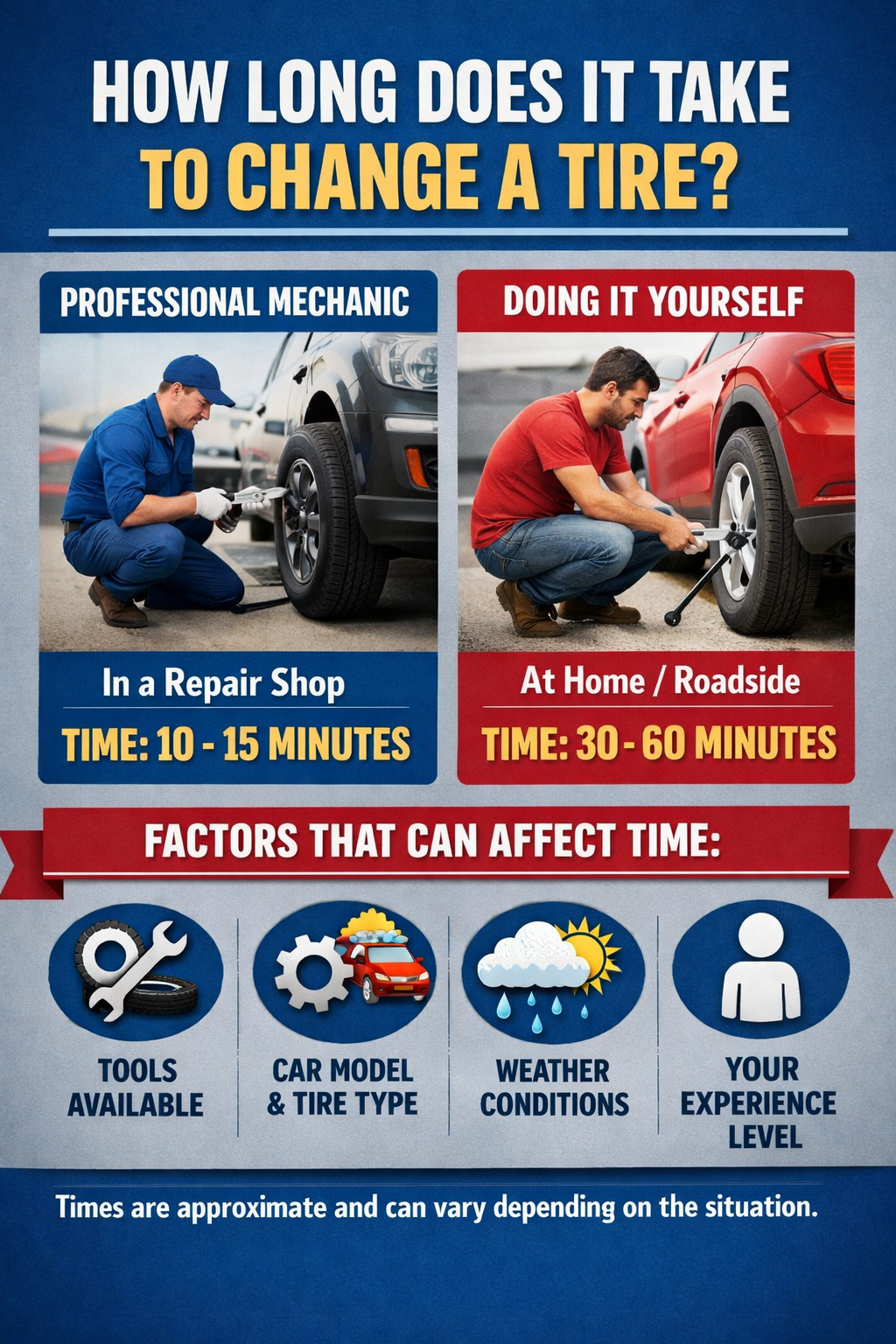

Changing a tire is one of those essential car maintenance skills everyone should know. Whether you’re a beginner who just bought a car or a professional driver, understanding the time, process, and best practices can save you stress and keep you safe.
In this guide, we’ll cover everything: how long it takes to change a tire, tools required, step-by-step instructions, common mistakes, and advanced tips to make the process faster and safer.
H1: How Long Does It Take to Change a Tire?
The time it takes to change a tire varies depending on skill level, tools available, and the type of vehicle. On average:
| Skill Level | Time Required (Per Tire) | Notes |
|---|---|---|
| Beginner | 20–40 minutes | May need extra time for safety, reading instructions, or slow movements. |
| Intermediate | 10–20 minutes | Familiar with car jacks, lug nuts, and standard tools. |
| Professional | 5–10 minutes | Experienced mechanics with proper tools, sometimes using pneumatic tools. |
Key takeaway: Even for beginners, with proper preparation, changing a tire should not exceed 40 minutes under normal conditions.
H2: Why Knowing Tire Change Time Matters
Understanding the time required is crucial for:
-
Emergency preparedness: Knowing how quickly you can swap a flat tire on the roadside.
-
Trip planning: Avoiding long delays during road trips.
-
Safety: Minimizing exposure to traffic or hazardous environments.
-
Efficiency: Professionals can estimate time for fleet or service work.
H2: Tools Needed to Change a Tire
Having the right tools can drastically reduce time and effort. Essential items include:
-
Spare tire – Ensure it’s inflated and in good condition.
-
Car jack – Standard scissor jack, hydraulic jack, or pneumatic lift.
-
Lug wrench – Cross wrench or torque wrench for proper tightening.
-
Wheel chocks – Prevent the car from rolling.
-
Gloves & mat – Keep hands clean and protect clothing.
-
Flashlight or emergency lights – Useful at night or roadside.
Optional but helpful tools:
-
Impact wrench
-
Portable air compressor
-
Tire pressure gauge
-
Trolley or creeper mat for comfort
H2: Step-by-Step Guide to Changing a Tire
H3: Step 1 – Ensure Safety
-
Park on a flat surface.
-
Turn on hazard lights.
-
Engage the parking brake.
-
Place wheel chocks behind opposite tires.
H3: Step 2 – Loosen Lug Nuts
-
Use a lug wrench to slightly loosen nuts while the car is still on the ground.
-
Do not remove them completely yet.
H3: Step 3 – Lift the Car
-
Position the jack under the vehicle’s recommended lift point.
-
Slowly lift until the tire is off the ground.
H3: Step 4 – Remove the Tire
-
Fully remove loosened lug nuts.
-
Pull the tire straight off.
H3: Step 5 – Mount the Spare Tire
-
Align the spare with wheel bolts.
-
Push it onto the hub.
-
Hand-tighten lug nuts.
H3: Step 6 – Lower the Vehicle
-
Slowly lower the car to the ground using the jack.
-
Tighten the lug nuts in a criss-cross pattern to ensure even pressure.
H3: Step 7 – Final Checks
-
Check tire pressure of the spare.
-
Ensure lug nuts are fully tightened.
-
Store tools and flat tire properly.
H2: Factors That Affect Tire Change Time
-
Skill level: Experience can cut time by half.
-
Type of tire: Larger tires on SUVs or trucks may take longer.
-
Roadside conditions: Uneven ground or bad weather slows the process.
-
Tool availability: Pneumatic tools and quality jacks make the process faster.
-
Physical fitness: Strength and flexibility can influence speed and ease.
H2: Tips to Change a Tire Faster
-
Practice in a safe environment: Familiarity reduces stress.
-
Keep tools organized: Avoid searching for items during emergencies.
-
Use a torque wrench: Ensures proper tightening without guesswork.
-
Maintain your spare: Check pressure regularly and rotate it into use occasionally.
-
Invest in power tools: Impact wrenches can cut time by 50–70%.
H2: Risks of Changing a Tire Incorrectly
Changing a tire incorrectly can lead to:
-
Loose lug nuts → Wheel detachment while driving.
-
Improperly inflated spare → Reduced control and increased wear.
-
Injuries → Back strain or crushed fingers from jacks.
-
Car damage → Scratched rims or bent hubs.
Pro tip: Always follow manufacturer instructions and safety warnings.
H2: Real-World Examples and Use Cases
-
Beginner driver: Maria, a new driver, took 35 minutes to change a tire during a rainy day. With practice, she now does it in 15 minutes.
-
Professional mechanic: John, a service center technician, routinely changes tires in 7–8 minutes per tire using an impact wrench.
-
Roadside emergency: A family on a highway managed a flat tire swap in 20 minutes with pre-packed tools, showcasing the importance of preparation.
H2: Quick Comparison: Manual vs Professional Tire Change
| Method | Avg Time | Pros | Cons |
|---|---|---|---|
| Manual (DIY) | 20–40 min | Cost-effective, handy skill | Slower, requires effort |
| Roadside service | 10–15 min | Fast, safe, minimal effort | Costly, may require waiting |
| Professional garage | 5–10 min | Fastest, precise torque | Needs appointment/time |
H2: Advanced Tips for Professionals
-
Always use criss-cross lug tightening to prevent wheel warping.
-
For high-performance or heavy vehicles, use a hydraulic floor jack for stability.
-
Rotate tires regularly to reduce wear and ensure faster swaps in emergencies.
-
Keep pre-marked torque settings for different vehicles to save time.
H2: FAQs (People Also Ask Style)
H3: How long does it take to change a car tire at home?
Answer: For a beginner, 20–40 minutes; for someone experienced, 10–15 minutes per tire. Always prioritize safety over speed.
H3: Can I change a tire alone?
Answer: Yes, with proper tools, safety measures, and a stable surface. Wheel chocks and a reliable jack are essential.
H3: How can I make tire changes faster?
Answer: Keep tools ready, use a torque or impact wrench, practice in a safe area, and ensure your spare tire is maintained and inflated.
H3: Is it dangerous to drive on a flat tire?
Answer: Yes. Driving on a flat can damage the wheel and vehicle, reduce control, and increase the risk of accidents. Change the tire immediately or call roadside assistance.
H3: How often should I check my spare tire?
Answer: Check every 3–6 months for pressure, tread wear, and overall condition to ensure readiness in emergencies.
Conclusion
Changing a tire is a vital skill that can save time, money, and even lives. On average, a tire change takes 20–40 minutes for beginners and under 10 minutes for professionals. With the right tools, preparation, and practice, anyone can become efficient and safe at swapping tires.
Actionable Takeaways:
-
Always carry essential tools in your car.
-
Practice changing a tire in a safe environment to reduce anxiety in real situations.
-
Maintain your spare tire regularly.
-
Follow proper safety measures: hazard lights, wheel chocks, and proper jack positioning.
-
Consider investing in a torque wrench or impact tools to save time and improve safety.
Mastering tire changes not only enhances personal safety but also builds confidence in handling roadside emergencies efficiently.