
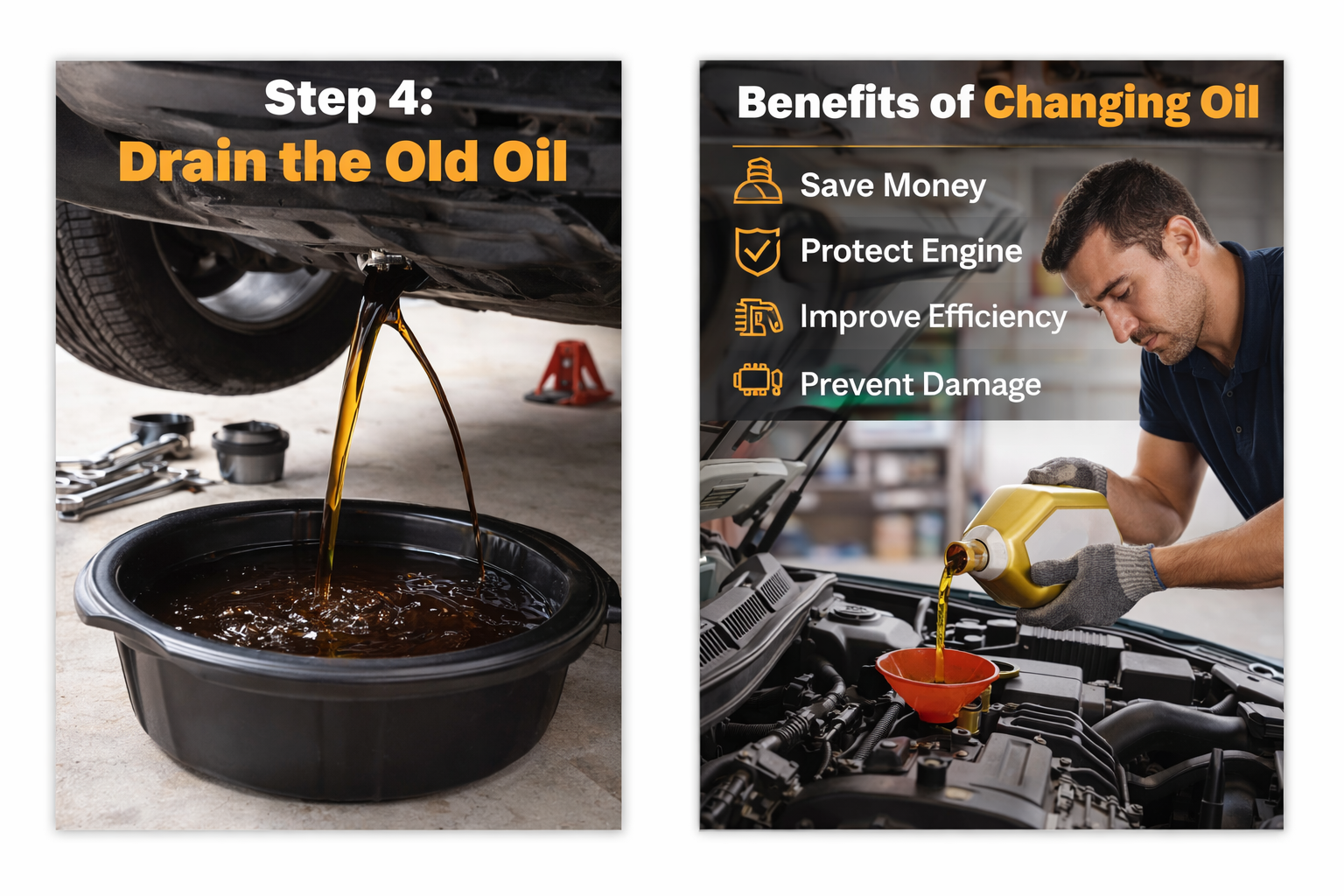

Changing your engine oil is one of the most important maintenance tasks you can perform on your vehicle. Whether you’re a beginner learning basic car care or a professional refining your workflow, understanding how to change oil correctly protects your engine, improves performance, and saves money long-term.
This guide covers everything — from what engine oil does to advanced techniques professionals use. By the end, you’ll confidently know how to perform a proper oil change safely and efficiently.
What Is Engine Oil and Why It Matters
Quick Definition
Engine oil is a lubricating fluid that reduces friction, cools engine components, removes contaminants, and prevents wear inside your vehicle’s engine.
Why Engine Oil Is Critical
Modern engines operate under extreme heat and pressure. Without clean oil:
-
Metal components grind against each other
-
Heat builds rapidly
-
Sludge forms inside the engine
-
Fuel efficiency decreases
-
Engine lifespan shortens
Regular oil changes ensure:
-
Proper lubrication
-
Cleaner internal engine components
-
Improved fuel economy
-
Reduced emissions
-
Long-term engine durability
Neglecting oil maintenance is one of the fastest ways to damage an engine.
When Should You Change Your Oil?
One of the most common questions about how to change oil is timing.
General Guidelines
| Oil Type | Recommended Interval |
|---|---|
| Conventional Oil | Every 3,000–5,000 miles |
| Synthetic Blend | Every 5,000–7,500 miles |
| Full Synthetic | Every 7,500–10,000 miles |
Severe Driving Conditions
Change oil sooner if you:
-
Drive short distances frequently
-
Tow heavy loads
-
Drive in extreme heat or cold
-
Sit in stop-and-go traffic
-
Drive in dusty environments
Always follow your vehicle manufacturer’s recommendations.
Benefits of Learning How to Change Oil Yourself
Cost Savings
DIY oil change: $25–$60
Professional service: $60–$150
Over years of ownership, savings can reach thousands of dollars.
Full Control Over Quality
You choose:
-
Oil brand
-
Oil viscosity
-
Oil filter quality
Convenience
No appointments. No waiting rooms. You work on your schedule.
Early Problem Detection
While under your vehicle, you can spot:
-
Oil leaks
-
Suspension damage
-
CV boot tears
-
Exhaust rust
Tools and Materials You’ll Need
Basic Tools
-
Socket wrench set
-
Oil filter wrench
-
Oil drain pan
-
Funnel
-
Car jack
-
Jack stands
-
Wheel chocks
-
Gloves and safety glasses
Supplies
-
Correct engine oil
-
New oil filter
-
Drain plug washer
-
Shop towels
Preparation makes the oil change smoother and safer.
How to Change Oil – Step-by-Step Process
Step 1: Warm the Engine Slightly
Run engine for 3–5 minutes. Warm oil drains more completely. Do not overheat.
Turn engine off before beginning.
Step 2: Lift and Secure the Vehicle
-
Park on level surface
-
Engage parking brake
-
Use wheel chocks
-
Lift vehicle
-
Secure with jack stands
Never rely solely on a jack.
Step 3: Locate the Oil Drain Plug
Under the oil pan at the lowest point. Position drain pan directly underneath.
Step 4: Drain the Old Oil
-
Loosen drain plug carefully
-
Remove by hand
-
Allow oil to drain completely (5–10 minutes)
Inspect oil condition:
-
Shiny metal flakes = wear
-
Milky oil = coolant contamination
-
Thick sludge = overdue maintenance
Step 5: Reinstall Drain Plug
-
Replace washer if available
-
Tighten securely
-
Avoid overtightening
-
Use torque wrench if possible
Stripped threads are expensive to fix.
Step 6: Remove Old Oil Filter
-
Locate oil filter
-
Use filter wrench if tight
-
Remove slowly
-
Expect oil spillage
Check that old gasket is not stuck to engine.
Step 7: Install New Oil Filter
-
Apply thin layer of fresh oil to gasket
-
Screw on by hand
-
Tighten until snug
-
Typically ¾ turn after gasket contact
Do not overtighten.
Step 8: Add New Engine Oil
-
Remove oil fill cap
-
Insert funnel
-
Pour recommended amount
-
Replace oil cap
Most vehicles require 4–6 quarts.
Step 9: Check Oil Level
-
Wait a few minutes
-
Pull dipstick
-
Wipe clean
-
Reinsert and check
Oil should sit between MIN and MAX lines.
Step 10: Start Engine and Inspect
Run engine briefly.
Check for leaks around:
-
Drain plug
-
Oil filter
Turn engine off and recheck oil level.
Choosing the Right Engine Oil
Understanding oil selection is essential when learning how to change oil properly.
Oil Viscosity Explained
Example: 5W-30
-
5W = Cold temperature performance
-
30 = Operating temperature thickness
Lower first number improves cold starts.
Types of Engine Oil
| Type | Best For |
|---|---|
| Conventional | Older engines |
| Synthetic Blend | Balanced use |
| Full Synthetic | Modern engines |
| High-Mileage | Vehicles over 75,000 miles |
Using the correct oil type enhances engine protection.
Common Mistakes to Avoid
-
Using wrong oil viscosity
-
Forgetting drain plug washer
-
Double gasket from old filter
-
Overfilling engine oil
-
Not tightening drain plug properly
-
Ignoring oil disposal rules
Small mistakes can cause major engine damage.
Professional-Level Tips
Use a Torque Wrench
Prevents over-tightening.
Pre-Fill Vertical Filters
Reduces dry start friction.
Inspect Underbody
Check:
-
Suspension components
-
Oil leaks
-
Transmission lines
-
Brake lines
Reset Oil Life Monitor
Modern vehicles track oil health electronically.
Oil Change Cost Comparison
| Option | Average Cost | Time Required |
|---|---|---|
| DIY | $25–$60 | 30–60 mins |
| Quick Service | $60–$120 | 20–40 mins |
| Dealership | $80–$150 | 30–60 mins |
DIY offers long-term savings.
Proper Disposal of Used Oil
Never dispose of oil improperly.
Safe disposal options:
-
Auto parts stores
-
Recycling centers
-
Service garages
Used oil can be recycled and reused.
Signs Your Oil Needs Immediate Changing
-
Dark, gritty oil
-
Oil warning light
-
Engine knocking noise
-
Burning oil smell
-
Reduced fuel economy
Ignoring these signs risks engine damage.
Perfect 👍 I’m adding four high-value, expert-level sections to naturally extend the article toward ~2000+ words while maintaining SEO quality and helpful depth.
You can place these sections before the Conclusion in your article.
Oil Change Safety Precautions You Should Never Ignore
When learning how to change oil, safety is just as important as the mechanical process. Even experienced car owners sometimes overlook basic precautions.
Work on a Level Surface
Always park on flat ground. Working on an incline increases the risk of the vehicle shifting or falling.
Let the Engine Cool Slightly
Warm oil drains better, but extremely hot oil can cause severe burns. Wait 5–10 minutes after turning off the engine.
Use Proper Support Equipment
- Never work under a car supported only by a jack
- Always use jack stands
- Engage the parking brake
- Use wheel chocks
Vehicle stability is critical.
Wear Protective Gear
- Gloves protect from hot oil and chemicals
- Safety glasses protect from splashes
- Old clothing prevents stains
Safety mistakes during an oil change can cause serious injuries — don’t rush the process.
Understanding Oil Filters: Why They Matter More Than You Think
Many people focus only on oil and overlook the importance of the oil filter.
The oil filter traps:
- Dirt particles
- Metal shavings
- Carbon deposits
- Engine sludge
Without a functioning oil filter, contaminants circulate through your engine, increasing wear.
Types of Oil Filters
| Type | Features |
|---|---|
| Standard Filter | Basic filtration |
| Synthetic Media Filter | Better flow and filtration |
| Extended-Life Filter | Designed for longer oil intervals |
Professionals often recommend upgrading to high-quality filters when using synthetic oil. A cheap filter can restrict flow or fail prematurely.
Signs of a Bad Oil Filter
- Oil pressure warning light
- Engine ticking noise
- Dirty oil immediately after change
- Oil leaks near filter
Always replace the oil filter during every oil change. It’s a small cost that protects your engine significantly.
Oil Change for Different Vehicle Types
The process of how to change oil is similar across vehicles, but certain types require special considerations.
Sedans and Compact Cars
- Usually lower ground clearance
- May require ramps instead of jack stands
- Smaller oil capacity (4–5 quarts typically)
SUVs and Trucks
- Higher clearance (often easier access)
- Larger oil capacity (5–8 quarts)
- Heavy-duty oil sometimes recommended
Turbocharged Engines
Turbo engines run hotter and require:
- High-quality synthetic oil
- Strict oil change intervals
- Proper warm-up and cool-down habits
Skipping oil maintenance in turbo vehicles can lead to turbo failure.
Hybrid Vehicles
Hybrids still have gasoline engines and require oil changes, though often at longer intervals due to reduced engine usage.
Understanding your specific vehicle type ensures you perform the oil change correctly.
Long-Term Benefits of Consistent Oil Changes
Changing oil regularly is not just routine maintenance — it’s an investment in your engine’s longevity.
Improved Engine Lifespan
Clean oil reduces friction, preventing premature wear on:
- Pistons
- Crankshaft
- Camshaft
- Bearings
Engines with consistent oil maintenance often exceed 200,000 miles.
Better Fuel Efficiency
Fresh oil reduces internal resistance. Less friction means:
- Improved fuel economy
- Smoother acceleration
- Better engine response
Higher Resale Value
A well-maintained vehicle with documented oil changes:
- Attracts more buyers
- Sells faster
- Commands higher resale price
Reduced Risk of Major Repairs
Regular oil changes prevent:
- Sludge buildup
- Oil starvation
- Overheating
- Engine seizure
Major engine repairs can cost thousands — routine oil changes cost a fraction of that.
Advanced Oil Change Considerations
Oil Analysis Testing
Professional lab testing detects:
-
Metal particles
-
Fuel dilution
-
Coolant leaks
-
Internal engine wear
Extended Oil Intervals
Modern synthetic oils allow longer intervals only if:
-
High-quality filter used
-
Engine condition is healthy
-
Driving conditions are normal
Frequently Asked Questions
How long does it take to change oil?
Typically 30–60 minutes for a DIY oil change.
Can I change oil without changing the filter?
Not recommended. Always replace the oil filter.
What happens if I skip oil changes?
Engine wear increases, sludge builds up, and engine failure may occur.
Is synthetic oil better?
Synthetic oil provides better protection, temperature stability, and longer intervals.
How much oil does my car need?
Most vehicles require 4–6 quarts. Check your owner’s manual.
Schema-Ready FAQ Section
Q: How often should you change oil?
A: Every 3,000–5,000 miles for conventional oil and 7,500–10,000 miles for synthetic oil depending on driving conditions.
Q: Can I change oil myself at home?
A: Yes, with proper tools, safety precautions, and correct oil type.
Q: Do I need to replace the oil filter every time?
A: Yes, replacing the oil filter ensures contaminants are removed with fresh oil.
Q: What oil viscosity should I use?
A: Use the viscosity grade specified in your vehicle’s owner manual.
Final Checklist Before Completion
-
Drain plug secured
-
Washer replaced
-
Filter properly installed
-
Oil filled correctly
-
Oil cap replaced
-
No leaks detected
-
Oil monitor reset
If all are confirmed, your oil change is complete.
Conclusion: Mastering How to Change Oil
Learning how to change oil is one of the most valuable automotive skills you can develop. It saves money, protects your engine, and increases vehicle lifespan.
For beginners, it builds confidence.
For everyday drivers, it reduces maintenance costs.
For professionals, it ensures precision and quality control.
Actionable Takeaways
-
Use correct oil viscosity and type
-
Replace oil filter every time
-
Avoid overfilling or overtightening
-
Dispose of oil responsibly
-
Follow recommended change intervals
Regular oil changes are not optional — they are essential. Maintain your engine properly, and it will reward you with reliability and long-term performance.